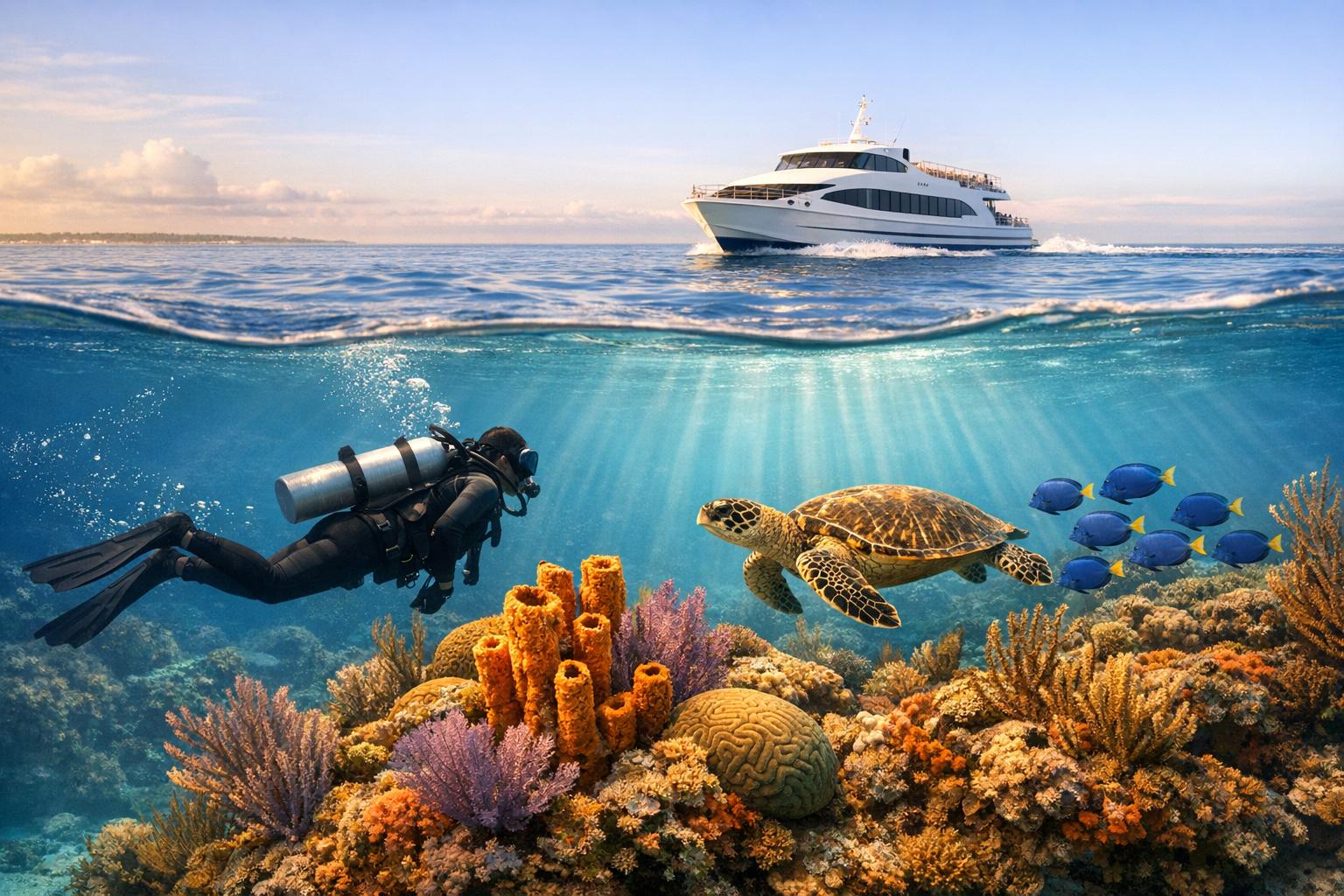
Cozumel is one of the best places to dive in 2026, offering crystal-clear waters, warm temperatures (27°C year-round), and incredible marine life. Located just 19 km from Playa del Carmen, it’s easy to reach via a 45-minute ferry ride. Whether you’re a beginner or an advanced diver, Cozumel’s reefs cater to all levels with features like coral walls, tunnels, and vibrant marine species such as sea turtles and eagle rays.
Key Highlights:
- Top Dive Sites: Palancar Caves, Santa Rosa Wall, Paradise Reef, and the C-53 wreck.
- Marine Life: Over 1,000 species, including the endemic Cozumel splendid toadfish.
- Diving Seasons: May–October offers calm seas and warm waters (28–29°C), while November–April is cooler (25–27°C) with a chance to see eagle rays.
- Getting There: Ferries from Playa del Carmen cost $250–$344 MXN one way, with multiple daily departures.
Cozumel’s protected reefs and drift diving conditions make it a must-visit for divers. Plan your trip around reef closures and seasonal highlights for the best experience.
The Best Diving in Cozumel in 2026 - Diving Mexico's Drift Diving Capital
sbb-itb-8d6faf7
Why Dive Cozumel in 2026
Cozumel is a diver's paradise, offering not only breathtaking underwater scenery but also the assurance of a well-protected marine ecosystem. Its designation as a National Park, Ramsar Wetland, and UNESCO Biosphere Reserve ensures the preservation of its vibrant reefs and diverse marine life [1]. These protections make Cozumel a top choice for divers of all experience levels.
The island is home to over 1,000 species, including rare creatures like endangered sea turtles, black coral, queen conch, and the endemic Cozumel splendid toadfish [1]. This incredible biodiversity is complemented by Cozumel's famous drift diving, which takes full advantage of its natural currents.
Drift diving in Cozumel is an experience like no other. The island's strong, steady currents effortlessly guide divers along towering coral walls and intricate underwater landscapes. With visibility often surpassing 30 meters, every detail of the reefs comes alive in vivid clarity [2][3].
"Cozumel island is the crown jewel for reef diving, with legendary drift dives along massive coral walls and visibility regularly exceeding 30 meters." - Seth Dive Mexico [3]
Adding to its appeal, Cozumel sits on the world’s second-largest coral reef system. This location offers a variety of habitats, from shallow reefs teeming with life to deeper mesophotic formations that extend to depths of 100 meters [1][4]. Whether you're a beginner or an expert, Cozumel's underwater world promises an unforgettable adventure.
Best Dive Sites in Cozumel
Cozumel offers a variety of dive sites that cater to everyone - from beginners exploring shallow coral gardens to seasoned divers seeking thrilling deep wall adventures. Thanks to its protected marine status, the waters boast incredible visibility, often ranging between 24 to 30 meters [7].
If you're an experienced diver looking for a challenge, these advanced sites won't disappoint:
Advanced Dive Sites
Palancar Caves is a globally renowned dive site, famous for its towering coral formations that create breathtaking, cathedral-like tunnels. With depths reaching 24 meters, it’s a favorite among seasoned divers. PADI Divemaster Austin Tuwiner described it as one of his "top five dives", saying:
"It's nearly an hour of navigating cathedral-like swim-throughs, massive overhangs, and dramatic topography I've seen" [7].
Devil's Throat at Punta Sur is a bucket-list site for advanced divers. This thrilling tunnel dive starts at 30 meters, descending at a 45-degree angle to 38 meters before opening into "The Cathedral" at 41 meters - right at the edge of recreational diving limits [5]. An underwater light is a must here, and divers should avoid stirring up sediment with scissor kicks. Keep a close eye on your no-decompression limits due to the depth [5].
Santa Rosa Wall offers an adrenaline-pumping drift dive along towering vertical walls starting at 24 meters. Strong currents guide divers past massive sponges, with frequent sightings of turtles and rays. It’s a favorite among visitors, earning a 4/5-star rating from diver reviews [2].
For beginners or those seeking a more relaxed experience, Cozumel has plenty of options:
Beginner and Intermediate Dive Sites
Paradise Reef is perfect for newcomers, with depths around 12 meters and gentle to moderate currents. This site is also popular for night dives, where you might spot the endemic Cozumel splendid toadfish hiding in crevices [6].
Yucab Reef is ideal for divers ready to handle moderate to strong currents. With depths between 14 and 20 meters, this sloping reef is alive with vibrant coral gardens, grey angelfish, and fascinating macro life like shrimp and seahorses [6].
Palancar Gardens offers a mix of beginner-friendly and intermediate-level diving. Depths range from 8 to 40 meters, with tunnels, pinnacles, and frequent turtle encounters. The currents here are milder, making it a great introduction to Cozumel’s famous drift diving [6].
The C-53 Felipe Xicotencatl wreck, a 56-meter-long former Mexican Navy minesweeper, lies at 24 meters. It’s a fantastic site for intermediate divers, with safe entry points at the bridge and deck for those interested in wreck exploration [6].
Diving Conditions in Cozumel: 2026 Overview
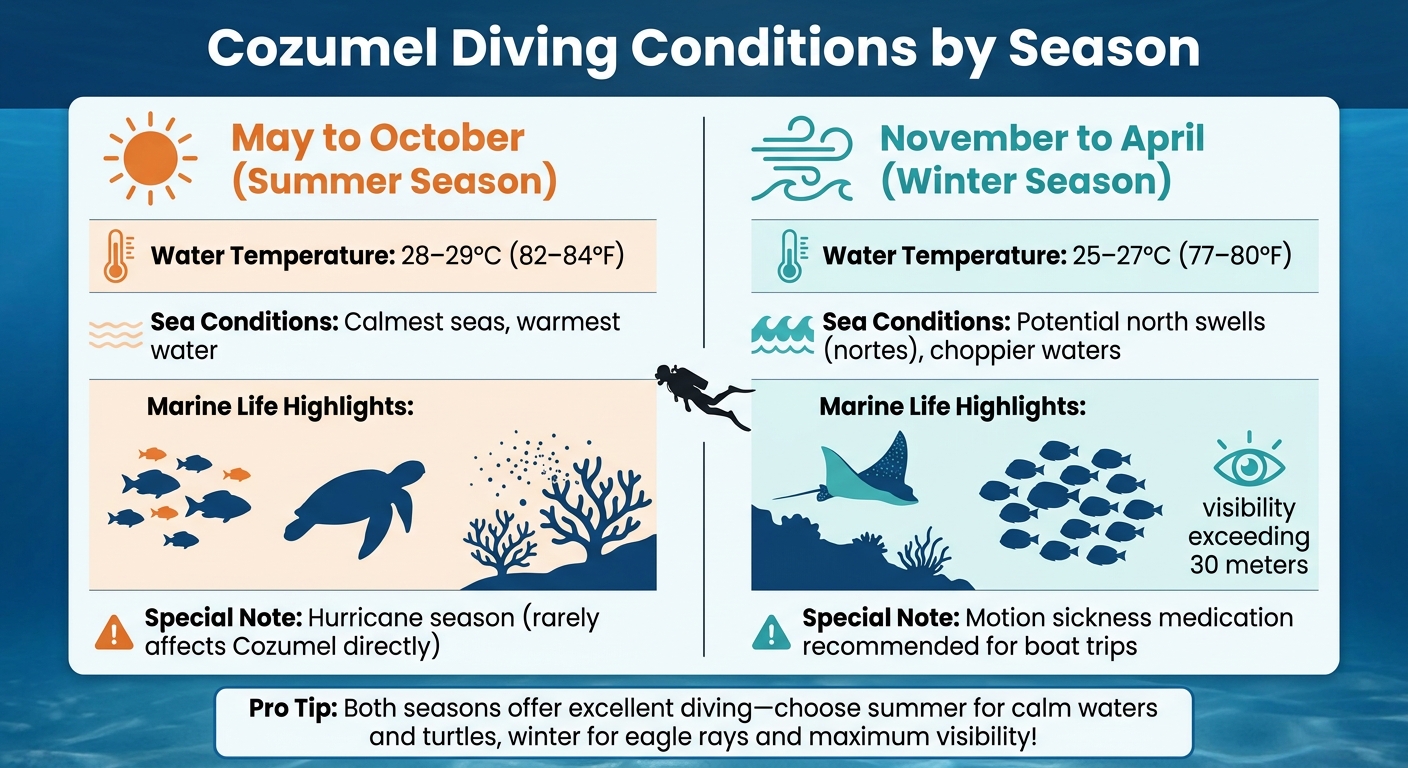
Cozumel Diving Seasons Comparison: Water Temperature, Conditions & Marine Life
Cozumel boasts excellent diving conditions all year, with water temperatures ranging from 25°C to 29°C (77°F to 84°F) [8]. Most divers opt for a swimsuit or a 3mm shorty to stay comfortable and protect against jellyfish.
Visibility is consistently outstanding across the island's dive sites, though it can vary slightly depending on the season and location [8]. The strong currents, a hallmark of Cozumel diving, create thrilling drift dives that add to the underwater adventure [3]. These currents shift with the seasons and locations, shaping the dynamic diving experience. A seasonal breakdown of these conditions is provided below.
In 2026, a rotating reef closure schedule has been implemented to protect coral ecosystems from heavy tourism [9]. Specific sites, such as Palancar Cuevas, close during August and September, while Paradise Reef is off-limits in June and July. However, some sites, like Dzul-Ha, Yucab, and Santa Rosa Wall, remain open year-round. Be sure to check the reef closure schedule when planning your dives to avoid missing out on your preferred locations.
Here’s a closer look at how the seasons influence diving conditions.
Diving Conditions by Season
Between May and October, the seas are calm, and water temperatures peak at 28–29°C (82–84°F) [8]. This period is perfect for spotting an abundance of fish and sea turtles throughout the reef system. While this overlaps with hurricane season, Cozumel rarely experiences direct hits.
From November to April, the water cools slightly to 25–27°C (77–80°F), and occasional north swells, or nortes, can make the waters choppier [8]. These swells primarily affect the windward side of the island, but sheltered reef sites remain accessible. During this time, you’ll have a great chance to see spotted eagle rays gliding along reef edges in small groups [8]. If you’re prone to seasickness, it’s a good idea to take medication before heading out on winter boat trips [8][3].
| Season | Water Temperature | Sea Conditions | Marine Life Highlights |
|---|---|---|---|
| May–October | 28–29°C (82–84°F) | Calmest seas, warmest water | High fish density, sea turtles |
| November–April | 25–27°C (77–80°F) | Potential north swells (nortes) | Spotted eagle rays cruising reef edges |
How to Get to Cozumel From Playa del Carmen
Passenger ferries connect Playa del Carmen's Terminal Marítima Navega to Cozumel's Terminal Marítima San Miguel [13]. The crossing typically takes 30 to 45 minutes, depending on sea conditions [10]. Once you arrive, you'll find yourself conveniently close to most dive operators.
In 2026, three companies operate this route: Ultramar, Winjet, and Xailing [11]. Ultramar offers the most frequent service, with departures starting at 6:00 AM or 8:00 AM and running until 10:00 PM [13]. Winjet operates from 6:30 AM to 9:30 PM [10], while Xailing runs from 7:30 AM to 9:30 PM [11]. Combined, these companies provide over 20 crossings daily [12].
Ticket prices vary by operator. One-way fares range from $250 MXN (about $12 USD) with Winjet to $344 MXN (around $18 USD) with Xailing [18, 19]. Ultramar tickets are generally priced at $320 MXN (approximately $18.30 USD), with an optional first-class upgrade available for $380 MXN [13]. These prices include an environmental sanitation tax of roughly $24.37 MXN [13].
This frequent service is a big help when planning your dive schedule. Keep in mind that the channel can get choppy, especially during winter nortes, which might affect divers prone to motion sickness. To minimize discomfort, sit in the center of the lower deck and consider taking motion sickness medication about 30 minutes before boarding [14].
Ferry Schedules and Costs
Here’s a quick breakdown of the 2026 ferry schedules and prices:
| Operator | First Ferry | Last Ferry | Frequency | One-Way Price |
|---|---|---|---|---|
| Ultramar | 6:00 AM or 8:00 AM | 10:00 PM | Every 30–60 minutes | $320 MXN (≈$18.30 USD) |
| Winjet | 6:30 AM | 9:30 PM | Hourly | $250 MXN (≈$12 USD) |
| Xailing | 7:30 AM | 9:30 PM | Every 30–60 minutes | $344 MXN (≈$18 USD) |
To ensure a smooth boarding experience, aim to arrive 30 to 45 minutes before departure, especially during busy times like 9:00–11:00 AM [13]. This buffer helps you avoid missing your ferry and any planned dives.
If you’re diving with Seth Dive Mexico’s Cozumel Diving package ($165 per person), which includes hotel pickup and direct boat access, plan to arrive at least 60 minutes before your dive boat's departure [10].
Travel Tips for Divers
Taking your dive gear on the ferry is usually straightforward. The standard luggage policy allows one item weighing up to 25 kg (55 lbs), with total dimensions not exceeding 142 cm [21, 22]. Most dive bags meet these requirements, though deck storage can fill up quickly during peak times [15].
To protect valuable items like dive computers, cameras, and regulators, pack them in a smaller carry-on bag rather than your main gear bag [15]. Modern ferries are equipped with amenities such as air-conditioned cabins, open-air decks, Wi-Fi, and charging stations [21, 22], allowing you to review dive maps or charge devices during the trip.
It’s a good idea to carry Mexican pesos for ticket purchases, as this can speed up the process and may offer better rates than paying in USD [14]. Also, have small bills ready for marine park and pier fees ($5–6 USD per person, per day), which are typically collected in cash at the meeting point [2, 25].
During hurricane season (May through November), ferry services may be temporarily suspended due to rough weather, but they usually resume within hours [15]. Always check conditions before heading to the terminal.
With this information in hand, you’ll be well-prepared to kick off your diving adventure in Cozumel.
Marine Life in Cozumel's Reefs
Cozumel’s underwater scenery is nothing short of breathtaking, with striking coral formations and colorful sponges creating a vibrant marine habitat [9]. The reefs, part of the Mesoamerican Barrier Reef, are home to sea turtles, nurse sharks, and schools of tropical fish. One standout feature is the Santa Rosa Wall - a steep drop-off that plunges more than 1,800 meters and is decorated with gorgonians [16].
Year-round, divers can expect to see marine creatures like barracudas, angelfish, and parrotfish. Winter (January through April) brings exceptional visibility, often surpassing 30 meters [27,28]. This crystal-clear water makes it easier to spot eagle rays gliding by and to observe spotted drum hiding in reef crevices. Large schools of blue tangs also become more prominent during this time, adding to the dynamic underwater experience.
Summer (May through August) offers its own unique spectacle. One highlight is the coral spawning event, where corals simultaneously release eggs and sperm in a synchronized display that looks like underwater fireworks. During these months, water temperatures rise to a warm 28–29°C [27,28], boosting marine activity across the reef. While the summer months showcase the reef’s liveliness, they also highlight the importance of preserving these ecosystems.
Cozumel’s reefs are part of a region that hosts about 61 coral species - roughly 8% of the world’s total [17]. This biodiversity faces challenges from the growing impact of marine tourism. Responsible diving practices are essential to maintaining the health of these ecosystems.
If you’re planning to explore Cozumel’s reefs, there are simple ways to help protect them. Skip sunscreen before diving - even "reef-safe" options - as they can release particles that clog coral pores [9]. Instead, opt for a long-sleeve rash guard for sun protection. Also, check for any reef closures before booking your dive to ensure you’re following local conservation guidelines. By diving responsibly, you can help safeguard the beauty and biodiversity of Cozumel’s underwater world.
Diver Requirements and Preparation
Before booking your Cozumel dive, make sure your certification level matches the requirements of your chosen dive sites. Cozumel's reefs offer something for everyone - from complete beginners to seasoned divers - but each site has specific guidelines based on depth and current conditions.
If you're new to diving, consider the Discover Scuba Diving (DSD) program. This program allows participants aged 10 and older to explore shallow reefs up to 12 meters deep under supervision. Prices for this experience typically range from US$80 to US$170.
For most beginner and intermediate sites, an Open Water Diver certification is sufficient. However, if you're aiming for more advanced dives, like deeper wall dives, you'll need an Advanced Open Water or Advanced Adventurer certification. Many operators also recommend having at least 25 logged dives before attempting these more challenging sites. Planning to use Enriched Air (Nitrox) for longer bottom times? Make sure to complete a Nitrox Specialty certification.
If you’ve been out of the water for a while, consider your diving history. Divers with fewer than 50 dives who haven’t dived in over two years should either hire a private guide or take a refresher course. Those with over 50 dives can go up to four years without diving, but an absence of eight years or more also calls for a refresher course.
Aligning your certification with the dive site's requirements ensures both your safety and an enjoyable underwater experience.
Certification Levels for Each Dive Site
Choosing the right dive site based on your certification level is key to a safe and enjoyable experience. Shallow sites like Paradise Reef and Chankanaab are perfect for Open Water divers, offering a fantastic introduction to Cozumel's famous drift diving conditions. These sites also help build confidence while exploring the vibrant marine life.
Intermediate sites, such as Palancar Gardens, require good buoyancy control but remain accessible to Open Water-certified divers.
For advanced dives, including the deeper wall dives at Santa Rosa, Punta Sur, Barracuda, or challenging areas of the Palancar region, you'll need an Advanced Open Water or Advanced Adventurer certification. These sites feature greater depths and stronger currents, making advanced skills essential. Operators may also require you to complete at least one daytime dive before attempting specialized experiences like twilight or night dives. Completing any related E-Learning modules for your certification ahead of time can save you from spending valuable dive time in a classroom.
Matching your certification to the dive site not only ensures safety but also sets the stage for an unforgettable diving adventure in Cozumel.
Safety and Diving Best Practices
Diving in Cozumel's famous drift currents requires a different mindset compared to traditional reef diving. Instead of swimming against the current, divers let the flow carry them along the reef, starting south and drifting north, before surfacing for a boat pickup. To navigate this style of diving, focus on mastering your buoyancy control device (BCD), proper weighting, and steady breathing to achieve neutral buoyancy. When you want to pause and admire marine life, use large coral heads or rock formations as natural shelters from the current [18]. These basic techniques are key to staying safe in stronger currents.
Resisting strong currents is never a good idea. If you need to hold your position, use gentle kicks to counter the flow. In cases where you feel a downward pull, stay calm - inflate your BCD slightly and kick upward at an angle. If things get intense, grabbing onto a rocky ledge or limestone base can help stabilize you. Always carry a Surface Marker Buoy (SMB) - this "safety sausage" (around US$56.98 for a 5 ft [~1.5 m] buoy with reel) is a must-have for signaling your location if you lose contact with your boat [18].
Cozumel's reefs fall within the Arrecifes de Cozumel National Marine Park, a 120 km² protected area home to over 1,000 marine species [1]. Follow park rules to minimize harm to this fragile ecosystem. Never touch coral, as it damages the delicate polyps and accelerates reef degradation [8]. Avoid disturbing species like black coral, queen conch, and sea turtles (both loggerhead and hawksbill). Special care should also be taken around the endemic Cozumel splendid toadfish (Sanopus splendidus), a species unique to the area [1].
Underwater photographers should be mindful of task overload, which can lead to unintentional drifting [19]. When choosing sunscreen, opt for mineral-based options like zinc oxide or titanium dioxide, as chemical sunscreens containing oxybenzone or octinoxate are banned within the marine park [14, 16]. Be aware that some dive sites close seasonally for ecological recovery, so check ahead for updated schedules [9].
To ensure a safe dive, stay informed about real-time conditions using apps like Windy or Windguru, which provide hourly updates on wind and currents. Invest in well-fitting, durable fins to help you navigate strong currents more effectively. Additionally, carrying DAN (Divers Alert Network) insurance is a smart precaution to cover potential decompression chamber costs if needed. These steps, combined with respecting marine park regulations and monitoring seasonal closures, will help you enjoy Cozumel's underwater wonders responsibly. Keep in mind that the local harbor master carefully monitors wind conditions and may close the port to small boats if the weather turns hazardous [18].
Conclusion: Plan Your Cozumel Diving Trip
Cozumel offers an extraordinary diving experience that caters to all skill levels. With its famous drift diving, crystal-clear visibility of 30–40 meters, and iconic dive sites, the island is a diver's paradise. From gentle currents to exhilarating wall dives, Cozumel's reefs provide a variety of underwater adventures. Whether you're just starting out or you're a seasoned diver, this destination is sure to impress.
For those traveling from Playa del Carmen, consider using our direct dive boat service, which gets you to the reefs in just about 30 minutes - fast and convenient.
Seth Dive Mexico specializes in private, guided diving trips. Their all-inclusive Cozumel Ocean Diving package is priced at $165 per person for a 2-tank dive day. This package includes everything you need: equipment, transportation, marine park fees, and even complimentary hotel pickup within the Playa del Carmen area. With over two decades of experience, more than 8,000 guided dives, and stellar ratings - 4.9/5 on TripAdvisor and 5.0/5 on Google - Seth Dive Mexico has earned the TripAdvisor Travelers' Choice award for eight years running. They ensure a stress-free, unforgettable diving experience [20].
From the vibrant reefs to the easy access from Playa del Carmen, every detail has been considered to make your dive trip effortless. Book your private diving adventure today and explore the breathtaking underwater world of Cozumel.
FAQs
How do I check which Cozumel reefs are closed in 2026?
To check which Cozumel reefs will be closed in 2026, refer to the official closure schedule issued by maritime authorities or organizations dedicated to marine conservation. These schedules are often shared by reliable local sources committed to protecting the area's marine ecosystems.
What wetsuit should I pack for Cozumel in each season?
For Cozumel, it's best to bring a 3mm wetsuit if you're visiting during the warmer months. However, in the cooler months, particularly in winter when water temperatures dip, a 5mm wetsuit or one with a hood is a better choice. This will help keep you comfortable and protected while diving.
Can I do Cozumel dives as a day trip from Playa del Carmen?
Yes, diving in Cozumel is absolutely doable as a day trip from Playa del Carmen. With Seth Dive Mexico, you can skip the hassle of ferry schedules. They provide direct dive boat services from Playa del Carmen’s marina straight to Cozumel’s stunning reefs. Thanks to the close proximity between the two spots, you can enjoy an entire day of diving and still return the same evening - no overnight stay required.
Frequently Asked Questions
Do I need an advanced certification to dive Cozumel, or is Open Water enough?
An Open Water certification covers most of Cozumel's popular sites, including Paradise Reef and Palancar Gardens, which have manageable depths and mild currents. You'll need Advanced Open Water (plus roughly 25 logged dives) for deeper wall dives like Santa Rosa Wall and Devil's Throat at Punta Sur. If you're unsure which sites match your certification, send Seth your log book total and he can recommend the right itinerary.
What is drift diving actually like, and is it safe for newer divers?
Drift diving means the current carries you along the reef wall rather than swimming under your own power, which feels effortless once you relax into it. Shallow sites like Paradise Reef have gentler flows that make a solid introduction, while stronger current sites are reserved for certified divers with solid buoyancy control. Diving with a private guide keeps the group small so your guide can monitor conditions and adjust the dive plan in real time.
What extra fees should I budget for beyond the dive package price?
Plan for marine park and pier fees of roughly $5–6 USD per person per day, which are typically collected in cash at the meeting point. If you travel independently, round-trip ferry costs add $24–36 USD per person depending on the operator. An all-inclusive guided package that covers equipment, transport, and park fees simplifies budgeting and avoids surprise charges at the dock.
When is the best time of year to see eagle rays and sea turtles in Cozumel?
Sea turtles are present year-round across most reef sites, while spotted eagle rays are most reliably spotted from November through April when cooler water temperatures draw them cruising along reef edges. Summer months bring warmer water and high fish density, including the rare coral spawning event in late summer. Both seasons offer rewarding diving; the right choice depends on which species you most want to see.
Can I bring my own dive gear on the ferry, or will I need to rent equipment?
Most dive bags fall within the standard ferry luggage limit of 25 kg and combined dimensions under 142 cm, so bringing your own gear is straightforward. Pack sensitive items like regulators, dive computers, and cameras in a smaller carry-on rather than the checked bag to protect them during the crossing. Guided packages include full equipment rental if you'd rather travel light.