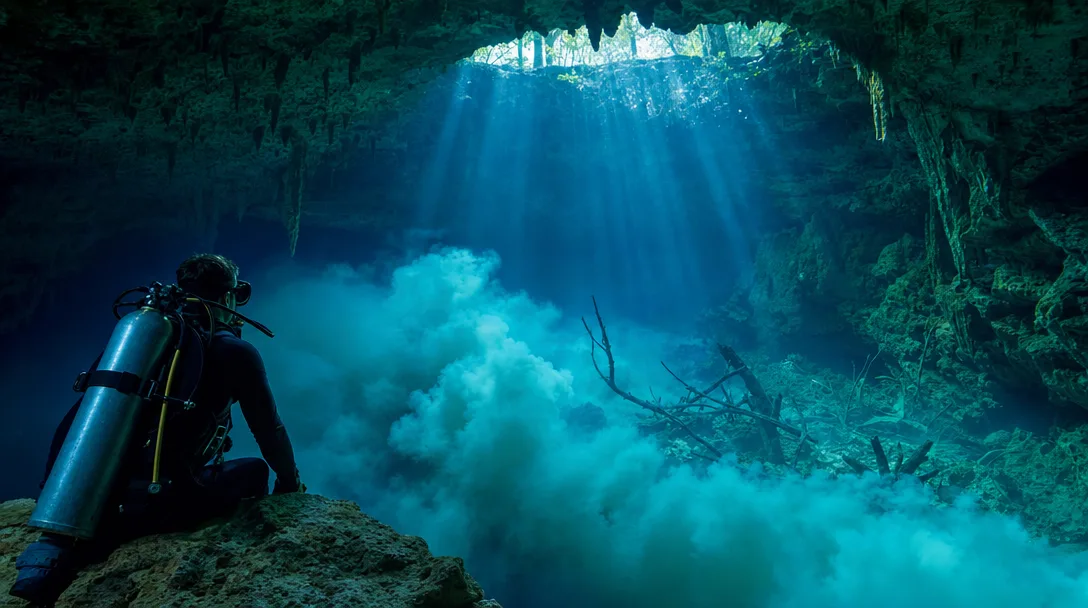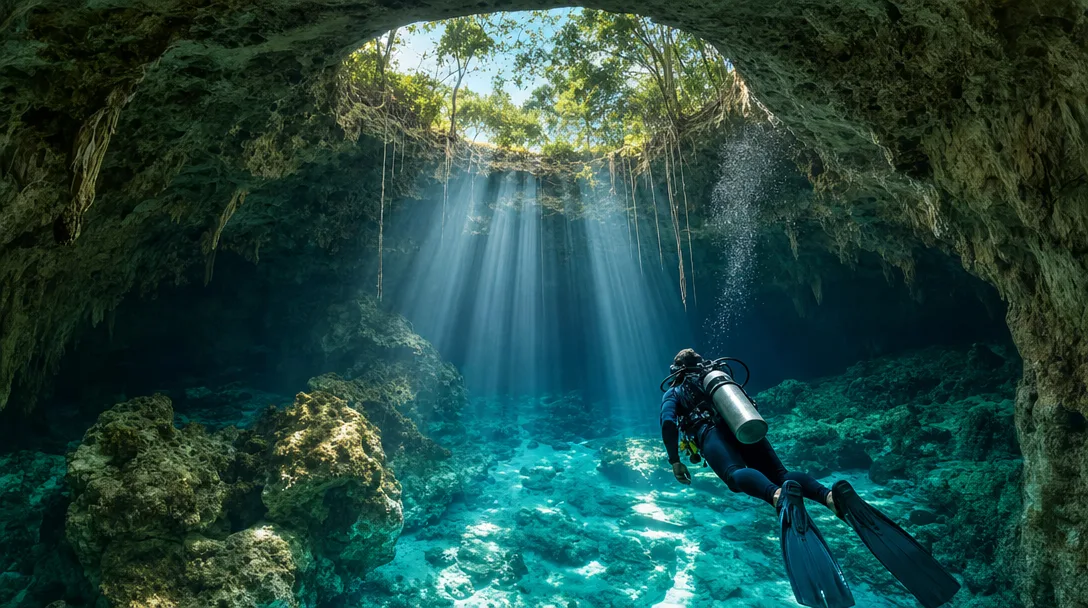
ComparisonsDrift Diving in Cozumel vs Still Water in Cenotes
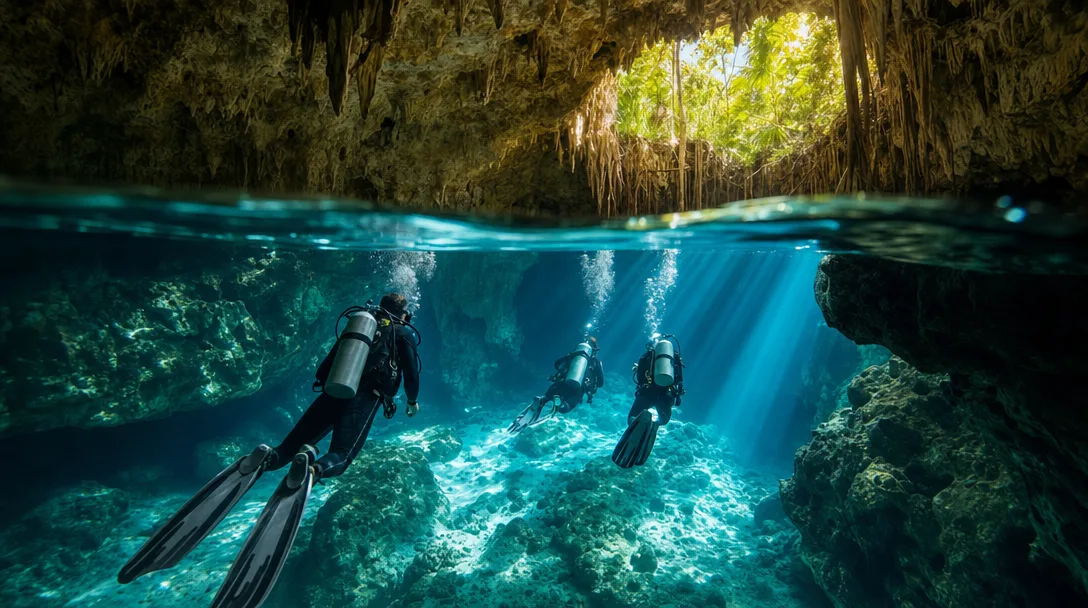
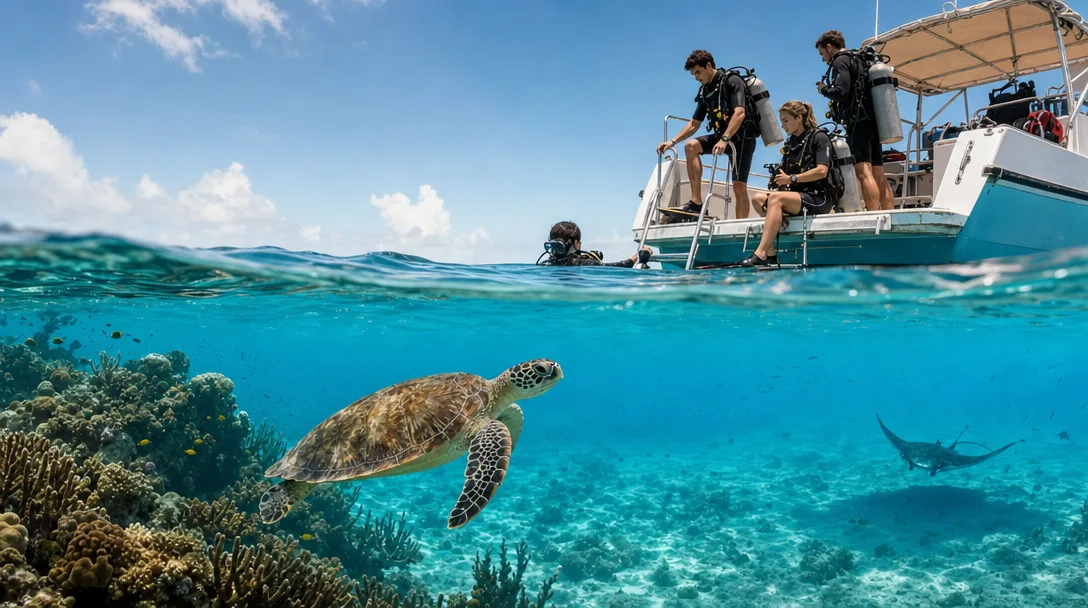
Cozumel drift diving vs cenotes: reef color and marine life versus 100+ meter visibility, still water, and calmer cavern dives.
Dive guides, cenote tips, and stories from Mexico's underwater world. The stuff worth reading between dives.
ComparisonsCozumel drift diving vs cenotes: reef color and marine life versus 100+ meter visibility, still water, and calmer cavern dives.
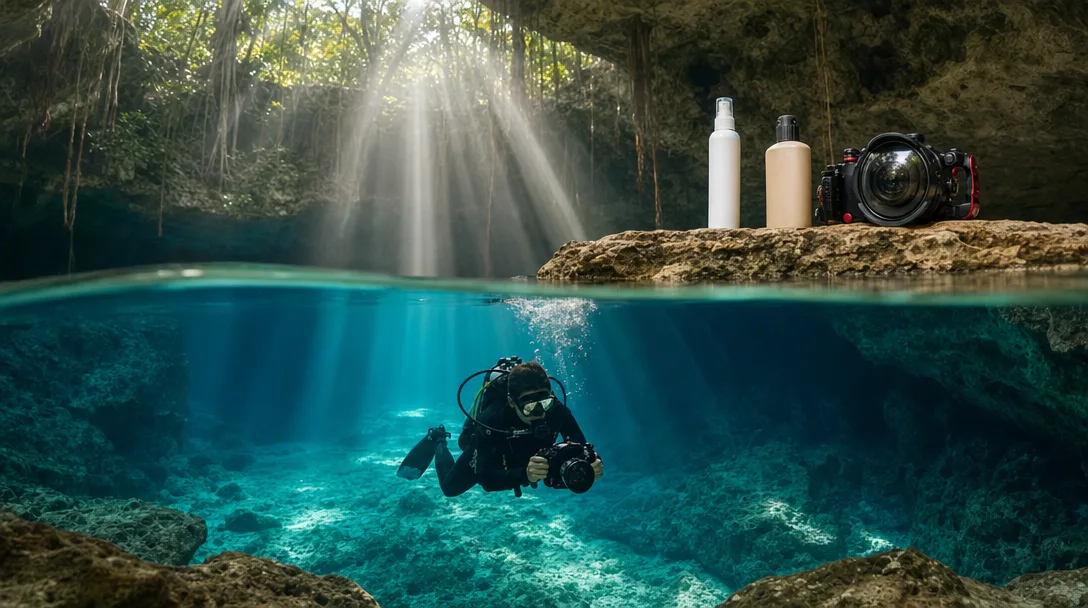
GuidesCenote diving rules cover sunscreen, cameras, and buoyancy. Learn what’s allowed, why showering matters, and when cave certs are required.
GuidesYes—finish PADI eLearning first, and most beginners can get certified in 3 days in Playa del Carmen with 4 open-water dives.
GuidesTwo tanks is the standard cenote day. Three tanks only works when certification, site pairing, guide pace, and transfer time all line up.
GuidesChoose a dive shop in Playa del Carmen by certification, group size, safety checks, and full pricing before you book.
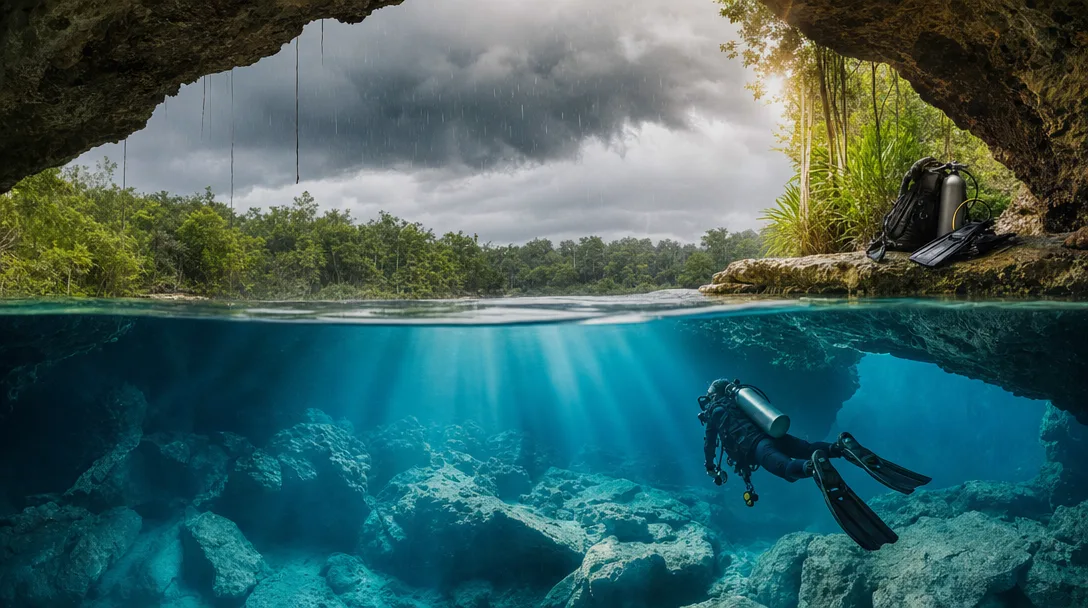
GuidesCenote diving after rain is usually fine: limestone filtration keeps visibility 30-60+ meters, while the main risks are lightning and slippery access.
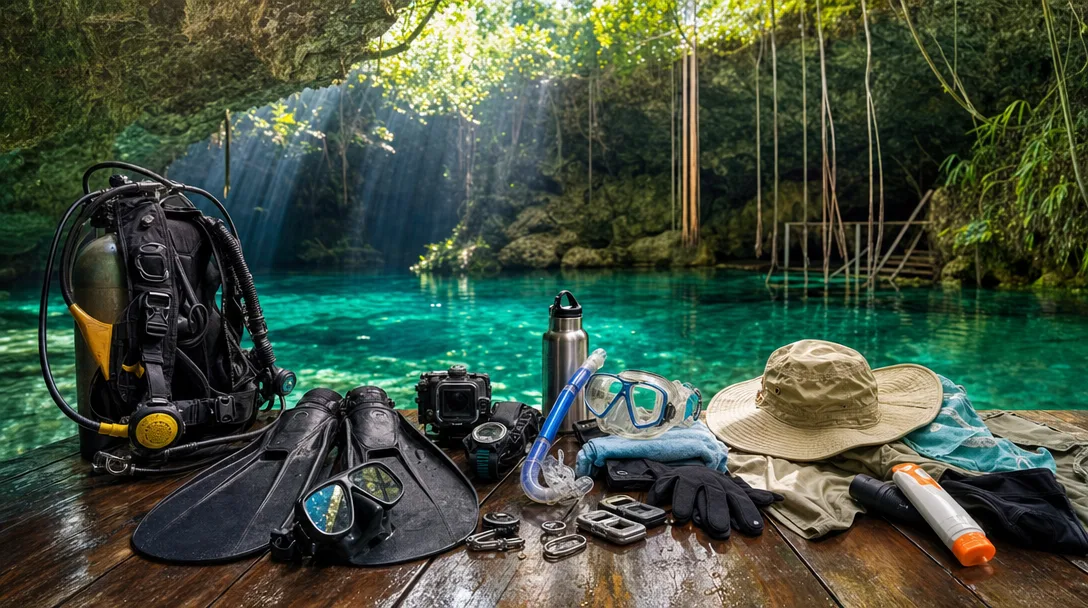
GuidesWhat to pack cenote diving: thermal protection, secure footwear, dry storage, and a dive light for Dos Ojos or Gran Cenote.
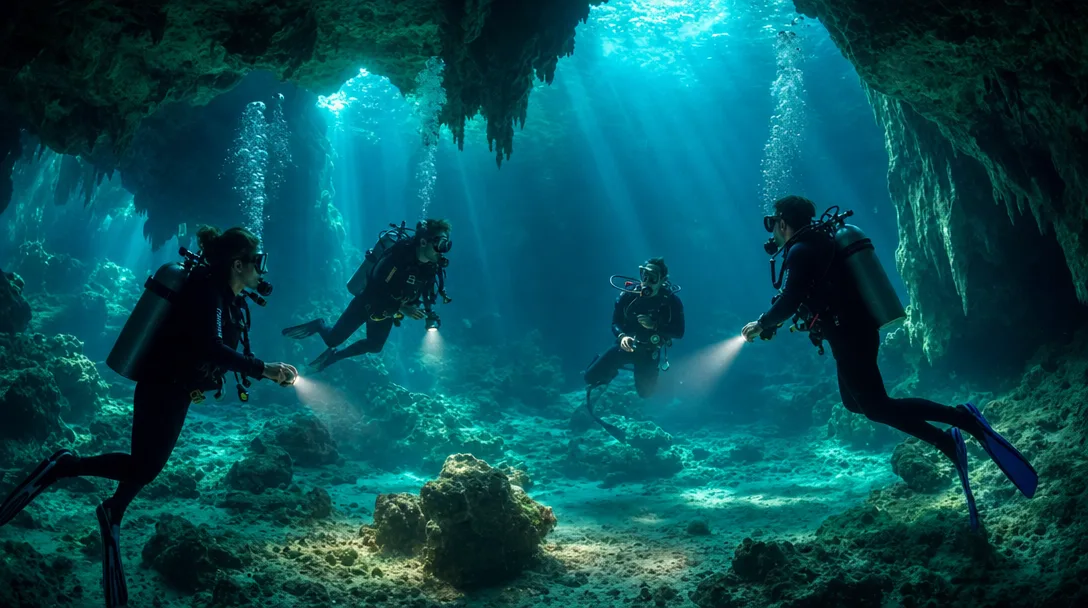
GuidesNight diving Playa del Carmen is for certified divers: Open Water or higher, 26-29°C water, shallow guided reef dives after sunset.
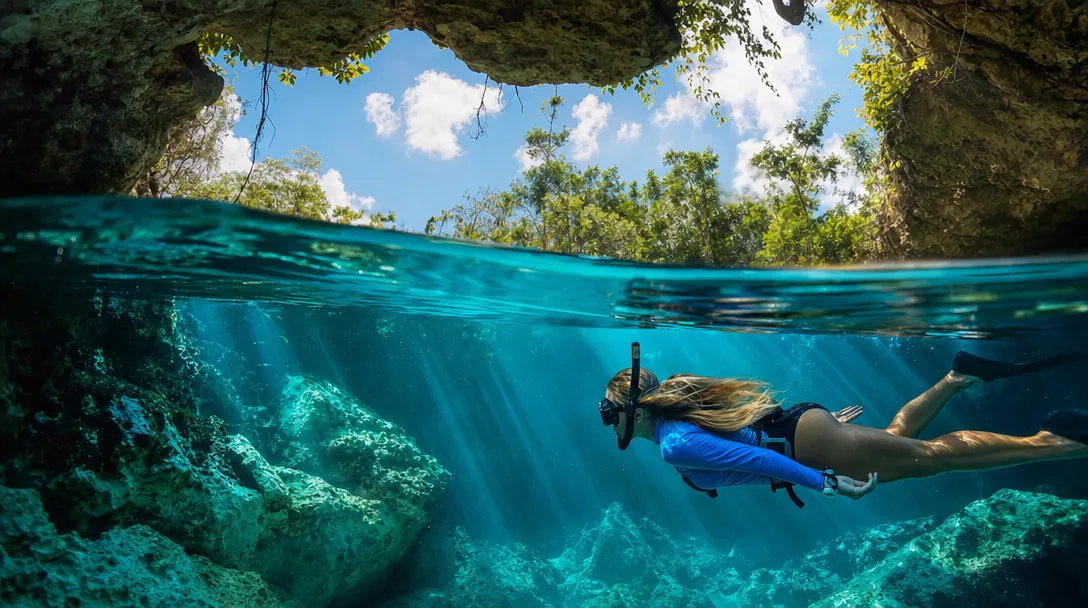
GuidesCenote snorkeling tour details: no certification, gear, lunch, water, snacks, towels, and hotel pickup from Cancun to Tulum for $90-150 pp.
GuidesCenote Angelita suits calm Advanced Open Water divers with recent experience and good buoyancy; newer or rusty divers should choose an easier cenote.
GuidesWhat is a cenote? A cenote is a natural limestone sinkhole in the Yucatán; learn how it forms, why it’s common there, and the main types.
Reading about cenote diving is one thing. Floating through crystal-clear caverns beneath the jungle is another. Tell us your dates and we will build your perfect dive day.