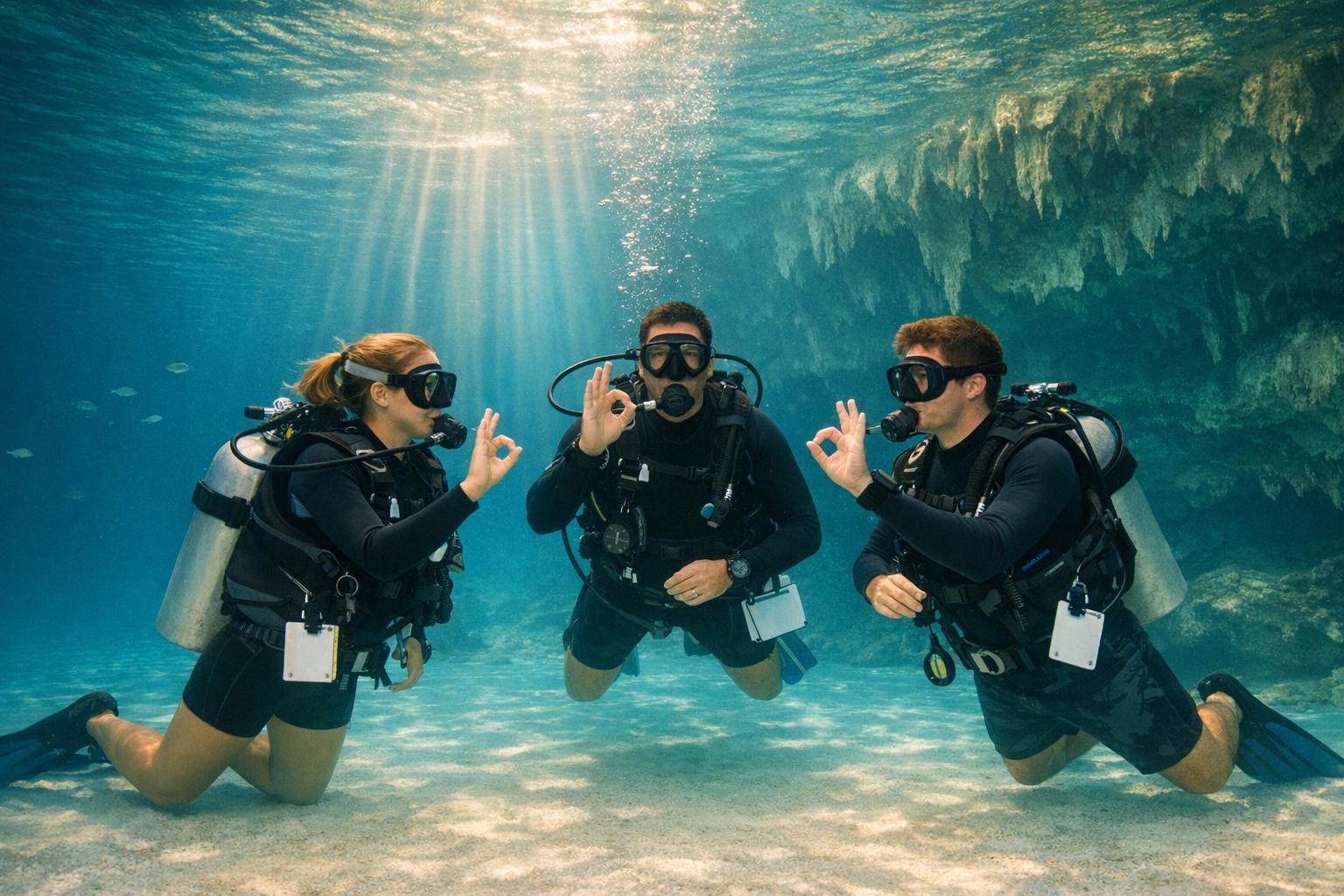
Getting your PADI certification in Playa del Carmen offers an unforgettable learning experience compared to training at home. Here's why:
- Warm, clear waters: Dive in cenotes with 100+ meters visibility and reefs teeming with marine life. Water temperatures stay at 25°C–29°C year-round.
- Fast-track training: Complete the eLearning at home and finish in just 2.5–3 days on-site.
- Stunning locations: Practice in calm cenotes and transition to vibrant Caribbean reefs.
- Personalized instruction: Small class sizes (1–4 students per instructor) ensure focused guidance.
- Affordable packages: Starting at $400 USD, including equipment and certification.
At-home training may be convenient, but it often involves cold, murky waters with limited visibility. For a more engaging and enjoyable experience, Playa del Carmen stands out as the ultimate destination to start your diving journey.
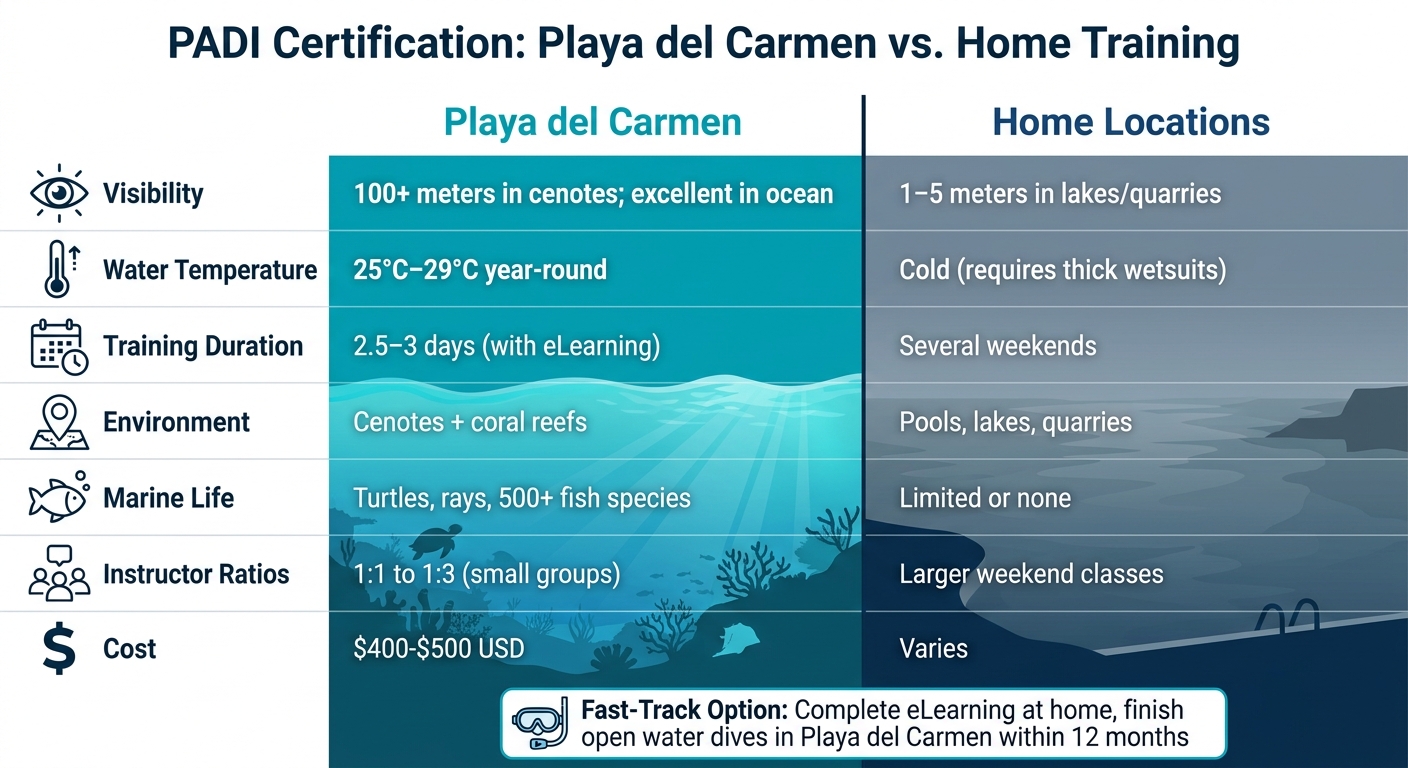
Playa del Carmen vs Home PADI Certification Comparison
1. Getting Certified in Playa del Carmen
Playa del Carmen offers a hands-on diving certification experience, far removed from the limitations of indoor pools or simulated environments.
Access to Training Environments
The cenotes and Caribbean reefs of Playa del Carmen provide an ideal setting for dive training. Sessions often start in the calm, shallow waters of cenotes, where you can practice foundational skills [3]. Just a short trip offshore, you'll find vibrant coral reefs teeming with sea turtles and colorful tropical fish [1][2]. This combination of environments gives you firsthand exposure to the same stunning locations that attract divers worldwide.
Water temperatures in the area are consistently comfortable. The ocean ranges from 25°C to 29°C, while cenotes maintain a steady 25°C throughout the year [3]. These warm conditions mean you can skip the bulky wetsuits and focus on refining your diving techniques.
This dual-environment training prepares you for a variety of aquatic conditions, paving the way for more advanced skill-building.
Skill Development Opportunities
Diving in both cenotes and the ocean introduces you to key concepts like how salinity affects buoyancy [7]. Cenotes offer a controlled space to master basic skills before transitioning to open-water dives, where you'll encounter mild currents and interact with marine life [3][7]. For those pursuing advanced certifications, iconic sites like The Pit (40 m) and Angelita (over 30 m) provide unique challenges that enhance buoyancy control and overall expertise - opportunities you won't find in standard training setups [1][5].
In addition to honing your technical abilities, Playa del Carmen's training programs are supported by a range of resources tailored to your needs.
Support and Resources
Seth Dive Mexico ensures a personalized learning experience by offering small class sizes - no more than four students per instructor. This allows for focused, one-on-one guidance. Their multilingual instruction and PADI materials are available in English, Spanish, French, or German, making the process accessible to a wide range of participants [1][8]. Plus, free hotel pickup is available across the Riviera Maya, from Cancún to Tulum [1][2].
The PADI Open Water course starts at US$400 and includes equipment, fees, and a digital certification card. If you complete the eLearning portion at home, you can finish the in-water training in just two days, leaving plenty of time for recreational dives. The Advanced Open Water course, priced between US$375 and US$400, offers specialty options like Peak Performance Buoyancy and Drift Diving, letting you tailor the experience to your interests [1][8].
sbb-itb-8d6faf7
2. Getting Certified at Home
Training at home meets PADI standards, but it doesn’t quite match the vibrant, immersive experience of tropical diving destinations.
When you start learning to dive at home, you’ll likely begin with pool sessions in controlled environments before moving on to open water dives in local lakes or quarries. These settings, often cold and murky, feel worlds apart from the clear, warm waters of Playa del Carmen. While PADI’s curriculum is consistent globally, your training environment can heavily influence how enjoyable and engaging the process feels.
Access to Training Environments
Local training sites often come with challenges like low visibility and cooler water temperatures. This is a sharp contrast to tropical locations like Playa del Carmen, where conditions are generally sunny, warm, and crystal clear [1][4]. Fortunately, the PADI referral system offers a solution: you can complete the theory and pool sessions at home, then finish your open water dives in Playa del Carmen within 12 months [4]. This approach combines the convenience of local training with the excitement of tropical diving.
Skill Development Opportunities
Diving in cold, murky waters can be tough for beginners. Limited visibility and stagnant water in quarries or lakes make it harder to practice buoyancy control and other essential skills. While these environments help you master the basics needed for certification, they don’t fully prepare you for the dynamic conditions of actual dive sites. Clearer tropical waters, by comparison, provide better visual feedback and a more comprehensive learning experience.
Diving Experiences Available
Local training sites often lack the rich marine life and stunning underwater landscapes that make diving so captivating. Unlike tropical reefs teeming with sea turtles, colorful fish, and dramatic coral formations, home-based environments tend to feel biologically sparse. To save time, many students opt to complete the eLearning portion of their certification at home. This allows them to skip straight to the exciting open water dives at destinations like Playa del Carmen, making the most of their vacation [4][6].
Pros and Cons
Here’s a breakdown of the main benefits and challenges of each training option, so you can decide which one works best for your needs.
Both routes align with PADI's global standards, but the experience varies significantly. This comparison will help you weigh your schedule, budget, and diving goals.
Playa del Carmen offers a tropical paradise for training, with warm, crystal-clear waters. You’ll hone your skills in cenotes and dive into Caribbean reefs with stunning visibility. The training is focused and immersive, but it does come with the need to travel to Mexico. Costs typically range from US$400–US$500 per person, excluding flights and lodging [1].
Home-based training is all about convenience. You can spread theory and pool sessions across weekends, making it easier to fit into a busy schedule without taking time off. However, local conditions often include colder water and limited visibility, which can make practicing skills more challenging. The PADI referral system offers a solution: complete the theory and pool work at home, then finish your four open water dives in Playa del Carmen within 12 months [6].
Here’s a quick comparison of the two options:
| Feature | Playa del Carmen | Home Locations |
|---|---|---|
| Visibility | 100+ meters in cenotes; excellent in the ocean | Typically 1–5 meters in lakes/quarries |
| Water Temperature | 25°C–29°C year-round | Cold; thicker wetsuits needed |
| Training Duration | 2.5–3 days (with eLearning) | Stretched over several weekends |
| Environment | Cenotes and coral reefs | Pools, lakes, or quarries |
| Marine Life | Turtles, rays, 500+ fish species | Limited or none |
| Instructor Ratios | Private or small groups (1:1 to 1:3) | Often larger weekend classes |
Your choice depends on what matters most to you. If you’re looking for a once-in-a-lifetime learning experience in incredible conditions, Playa del Carmen stands out. On the other hand, if flexibility and spreading out costs are your priorities, starting at home and finishing in Mexico could be the perfect compromise. Think about your schedule, budget, and how immersive you want your training to be, and go from there.
Conclusion
Getting certified in Playa del Carmen offers an experience that goes far beyond the usual diving course. Unlike the cold, murky waters many divers train in, here you’ll learn in crystal-clear cenotes and vibrant Caribbean reefs, creating a foundation that most divers can only dream of.
"Most diving courses happen in cold quarries and murky lakes. Yours will happen in crystal‐clear cenotes and Caribbean reefs. The world's most spectacular classroom awaits." - Seth Dive Mexico [1]
Time efficiency is another big advantage. By completing your PADI eLearning at home, you can finish your in-water training in just 2.5–3 days. This lets you spend the rest of your vacation exploring cenotes and one of the most stunning reef systems in the world [1][7]. Training in these real-world conditions not only speeds up the certification process but also helps you build practical skills, like buoyancy control, while surrounded by marine life from the very start.
When deciding between traditional at-home training or this focused tropical approach, think about the kind of diving foundation you want. Warm, clear waters and personalized instruction allow for a deeper connection to the underwater world. The cost - typically ranging from US$400–US$500 per person - isn’t just for certification; it’s an investment in a transformative diving experience [1].
For those unsure about committing to the full Open Water course, Playa del Carmen also offers a Discover Scuba session for just US$165, giving you a chance to try diving before diving all in. Either way, training here gives you something that home-based courses can’t: the opportunity to fall in love with diving in one of the world’s most breathtaking settings [3].
FAQs
Do I need to know how to swim to get PADI certified in Playa del Carmen?
No, you don’t need to know how to swim to try scuba diving in Playa del Carmen. Programs like Discover Scuba Diving are designed for beginners and allow you to experience the underwater world under the supervision of a professional instructor, even if swimming isn’t your strong suit.
What should I bring for the course if equipment is included?
If the equipment is supplied, all you need to bring is your swimwear, a towel, and personal essentials such as sunscreen and a waterproof camera. There's no need to worry about packing any additional diving gear.
Is the PADI referral option worth it if I start at home?
Yes, the PADI referral option is a great choice if you begin your training at home. By completing the theory portion online before your trip, you free up more time during your vacation to focus on the practical, in-water dives in Playa del Carmen. This way, you can fully enjoy Mexico’s breathtaking cenotes and colorful Caribbean reefs without spending extra hours in a classroom. It’s a flexible approach that maximizes your diving adventure.
Frequently Asked Questions
Can I get PADI certified in Playa del Carmen even if I've never dived before?
Absolutely — the PADI Open Water course is designed specifically for complete beginners, and the warm, clear cenotes near Playa del Carmen make it one of the most forgiving places in the world to learn. Training starts in calm, shallow water before moving to Caribbean reef dives, so there is no prior experience required.
How long does it take to get PADI certified if I'm on vacation?
If you complete the PADI eLearning modules at home before your trip, you can finish all in-water training in as little as 2.5 to 3 days on-site, leaving the rest of your vacation free for fun dives. Without the eLearning prep, expect to add another half-day or more for the theory portion.
What's the difference between the Open Water and Advanced Open Water courses in Playa del Carmen?
The Open Water course earns your foundational certification and qualifies you to dive recreationally to 18 meters worldwide, while the Advanced Open Water course extends your depth limit to 30 meters and adds specialty skills like deep diving, buoyancy control, and drift diving. Both are available starting around US$375–$400 with small-group instruction and free hotel pickup across the Riviera Maya.
Will my PADI certification from Playa del Carmen be recognized worldwide?
Yes — a PADI certification issued in Playa del Carmen is globally recognized and valid at any dive site in the world, because PADI maintains consistent training and assessment standards across all affiliated schools regardless of location.
Can someone in my group who isn't certified still join the trip?
Yes — non-certified guests can join a Discover Scuba session starting at US$165, which lets them experience a supervised guided dive without any prior training or certification. It's a practical way for mixed groups of certified and first-time divers to share the same day on the water.