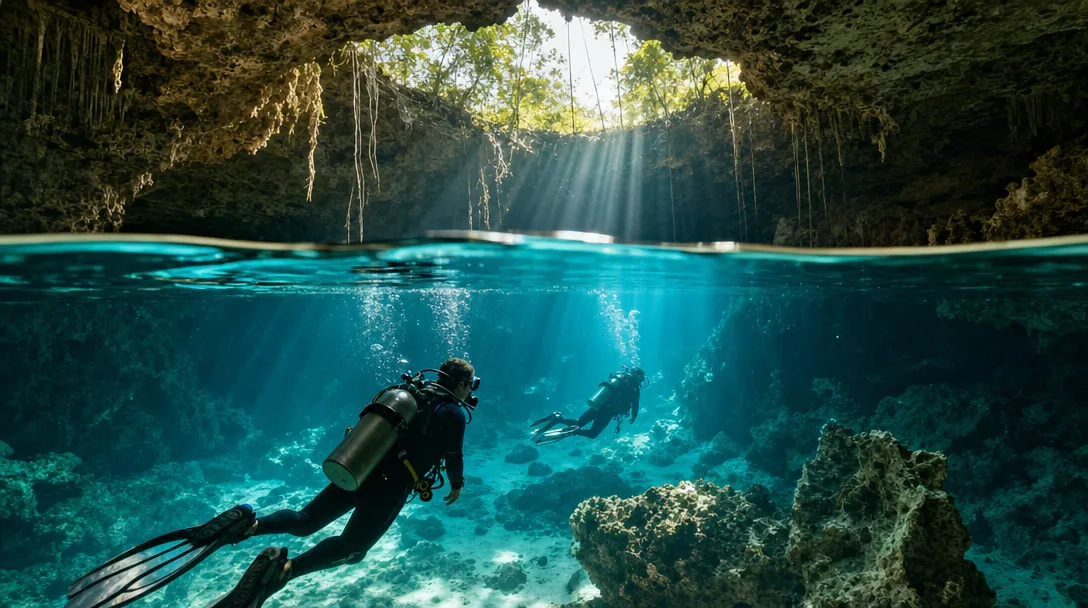
Cenote Diving Cancun: Day Trip Costs and Travel Time
Cenote diving from Cancun runs $180–$280 for a two-cenote day, with about two hours each way toward Tulum and gear, permits, and lunch included.
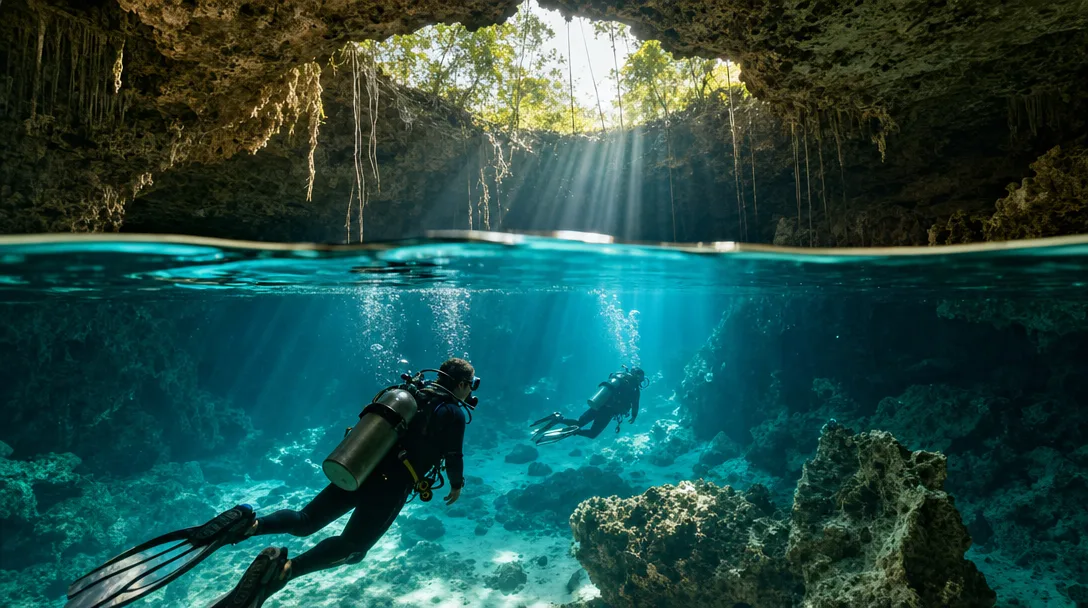
How much does cenote diving from Cancun cost, and how long does it take?
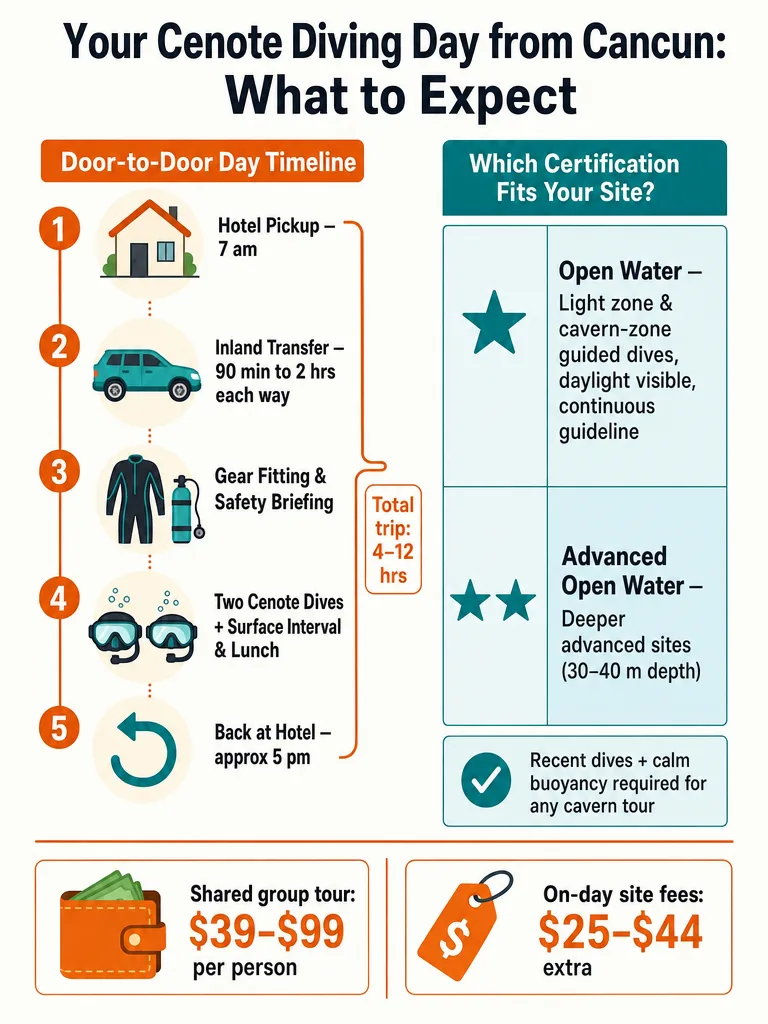
Cenote diving from Cancun runs $180–$280 per person for a two-cenote all-inclusive day, and it fills your whole day rather than a morning. According to AquaCore Adventures, a typical itinerary runs about 7 am to 5 pm, with roughly two hours of driving each way toward the Tulum corridor where the best dive cenotes sit. That price covers gear, permits, site fees, and lunch.
The core reason this costs more than a beach outing: cenotes are inland. Cancun Trip Insider notes cenote tours from Cancun involve 90 minutes to two hours of driving each way and can run anywhere from 4 to 12 hours depending on the itinerary. A scuba-focused day sits at the longer end because it adds gear fitting, safety briefings, surface intervals, and two separate cenotes.
If you only want to swim or snorkel, the math changes. Shared group cenote tours from Cancun range from about $39 to $99 per person, per Cancun Trip Insider, but those are usually snorkeling or sightseeing combos, not guided scuba. Don't compare the two directly; they buy very different days.
Traveling with a mix of certified divers and beginners, or want a specific pickup zone? Message Seth with your hotel, dates, and experience level for a tailored plan.
How long is the drive from Cancun to cenote diving near Tulum?
The drive breaks into two real segments that most tour listings blur together. Cancun to Playa del Carmen is about 68 km (42 miles) and takes roughly 45 to 60 minutes by private car, according to Seth Dive. The dive cenotes sit farther south near Tulum, so the full run from a Cancun hotel commonly lands around two hours depending on the specific site and traffic.
Manta Divers puts the same range plainly: the drive usually lands between ninety minutes and a little over two hours depending on the park and traffic. AquaCore Adventures cites about two hours to the Tulum area.
Two things shift your real number. First, where you start: a Cancun Hotel Zone pickup adds time versus starting from Playa del Carmen or Tulum. Second, which cenote: sites closer to Playa cut the drive, while The Pit and Angelita sit deeper in the Tulum corridor.
If your hotel is in Cancun, budget close to two hours each way and treat the cenote day as a full-day commitment.
For a closer base, our guide on choosing between Tulum and Playa del Carmen for diving breaks down how drive time changes by where you stay.
What time is pickup for cenotes, and when do you get back to Cancun?
Plan for an early pickup and a late-afternoon return. AquaCore Adventures describes the standard Cancun cenote day as running about 7 am to 5 pm, which builds in the two-hour transfer each way, gear setup, briefings, two dives, and lunch. Pickup itself varies by operator and pickup zone: AquaCore's own timeline starts as early as 6 am, so a Cancun Hotel Zone hotel typically means a roughly 6 to 7 am start and a full working day out.
Here's how the clock typically fills for a two-cenote day:
| Segment | Rough timing |
|---|---|
| Hotel pickup, Cancun | Around 6–7 am |
| Drive south toward Tulum | ~2 hours |
| Gear fitting and first briefing | 20–30 min |
| First cenote dive | 40–45 min |
| Surface interval and lunch | 60–90 min |
| Second cenote dive | 40–45 min |
| Rinse-down and drive back | ~2 hours |
| Return to Cancun | Around 5 pm |
Exact windows depend on your operator, your pickup zone, and which cenotes you dive, so confirm your specific schedule when you book. Free round-trip hotel pickup takes the transport guesswork off your plate; see how hotel pickup works from Cancun to Tulum for what to send if your stay isn't listed.
What does your first cenote day actually look like?
A cenote day runs in a fixed order: hotel pickup, drive inland, gear fitting, safety briefing, first dive, lunch, second dive, then the drive home. AquaCore Adventures lays out the flow from a 6 am pickup to the post-dive taco, and the pace is deliberately unhurried, which matters if you're nervous about diving under a rock ceiling for the first time.
Here's the workflow:
- Hotel pickup in the early morning, then the drive inland toward the Tulum area (about two hours from Cancun).
- Gear fitting at the cenote park. Water sits around 24–25 °C, colder than the reef, so AquaCore recommends a 5 mm suit.
- Safety briefing covering the guideline, lights, team spacing, and how to move without kicking up silt or bumping formations.
- First dive, staying in the daylight or cavern zone with the exit always in view.
- Surface interval and lunch to warm up and reset.
- Second cenote dive at a different site.
- Rinse-down and return drive to your hotel.
Guide ratios stay small. AquaCore lists a maximum of 4 divers per guide, with 3:1 as the international best practice from NACD and TDI. If you're anxious going in, our tips for feeling confident before a first dive pair well with a slow, small-group cenote day.
Can I do cenote diving with only Open Water?
Yes, Open Water certification is enough for many guided cenote cavern dives, but not for every site. AquaCore Adventures lists PADI Open Water plus a cavern-trained guide as the minimum for cavern-zone cenotes. Beginner-friendly routes like Dos Ojos (around 10 m) and Casa Cenote (6–8 m) are commonly guided for Open Water divers who stay in the daylight zone.
The limit is depth and site, not just your card. Deeper sites need more training: AquaCore says Angelita sits at 30–40 m and The Pit reaches 40 m max, both requiring Advanced Open Water.
So the honest answer splits by cenote. If your list is easier cavern sites, Open Water works with the right guide. If you're set on the deep, dramatic sinkholes, you'll need advanced training first.
We cover the full picture in can you dive cenotes with Open Water in Mexico, and what certifications let you dive The Pit if that deep site is on your radar.
What experience level is required for a cenote cavern tour near Cancun?
Comfort matters more than credentials. Manta Divers says guided cavern tours are for certified Open Water divers with recent dives and solid buoyancy, staying in the daylight zone on continuous guidelines. What counts in a cavern is calm: steady buoyancy, easy equalizing, and relaxed problem solving, so the overhead feels like an adventure rather than a nerve test.
These tours are not a first scuba lesson. A brand-new, uncertified diver, or someone who needs a basic skills class, isn't the right fit for a cavern day.
If it's been a while since your last dive, Manta Divers suggests a quick tune-up on the reef first, a chance to remember how weightlessness feels before adding a ceiling. An easy warm-up is a two-tank reef dive the day before your cenotes. Think of a cavern tour as the natural next step once you already enjoy ordinary open-water dives, not the place to learn.
Not certified yet, or bringing a non-diving partner? Options exist: see can non-divers join a cenote day and Discover Scuba in a cenote.
What is the difference between cavern rules and full cave diving limits?
Recreational cenote tours stay in the cavern zone; full cave diving is a separate technical activity. AquaCore Adventures defines the cavern zone as up to 60 m from a permanent air or light opening, where you can always see the exit, follow a permanent guideline, and dive with a cavern-trained guide. The cave zone lies beyond line-of-sight of the exit and requires Intro-to-Cave or full Cave certification with its own training path through TDI, IANTD, and NACD.
The dividing line is daylight and exit visibility. Commercial cenote dives around Cancun and the Riviera Maya operate almost exclusively in the light and cavern zones.
| Feature | Cavern (recreational) | Full cave (technical) |
|---|---|---|
| Exit / light | Always in view, up to 60 m from opening | Beyond line-of-sight |
| Certification | Open Water + cavern guide, or Cavern cert | Intro-to-Cave or full Cave (TDI, IANTD, NACD) |
| Who it's for | Vacation divers on guided day trips | Trained technical specialists |
If a listing markets "cave diving" for tourists, treat that as a red flag. Our guide on cavern vs cave diving for tourists explains what a safe guide will and won't do.
Dos Ojos, Casa Cenote, Angelita, and The Pit: which fits your Cancun day trip?
Pick by certification and comfort, not by fame. AquaCore Adventures lays out the depth and difficulty spread clearly: Casa Cenote and Dos Ojos suit easier guided days, while Angelita and The Pit are advanced choices reserved for divers with the training and calm to handle depth.
| Cenote | Depth | Level | Best for |
|---|---|---|---|
| Casa Cenote (Manatí) | 6–8 m | Open Water | Easiest entry, first cenote ever |
| Dos Ojos | ~10 m | Open Water | Classic light beams, 40–45 min dive |
| Angelita | 30–40 m | Advanced Open Water | Hydrogen sulphide cloud at 30 m |
| The Pit | 40 m max | Advanced Open Water | Deep, dramatic sinkhole |
AquaCore notes Casa Cenote is a mangrove-lined channel with the easiest entry, freshwater on top and brackish at depth. Dos Ojos delivers the classic "laser beam" light effects when sun hits the halocline, and its cave system has been featured by National Geographic. Angelita's sulphide cloud looks like an underwater river.
For a first cenote day from Cancun, Casa Cenote and Dos Ojos are the safe, high-reward picks; save Angelita and The Pit for after you have advanced training and recent dives.
To weigh the deep sites against the easy ones, see how to choose between Angelita, The Pit, and Dos Ojos and whether Advanced Open Water is worth it for cenotes.
Dedicated two-cenote dive day vs cheaper combo tour: which is better from Cancun?
They're different products, so the price gap is misleading. Cancun Trip Insider reports shared group cenote tours from Cancun at about $39 to $99 per person, but those are largely swimming, snorkeling, and sightseeing combos, often pairing a cenote with Tulum ruins, Cobá, Akumal turtles, or ziplines. A scuba-focused two-cenote day runs $180–$280 per person because it carries dive logistics, certified cavern guides, gear, permits, and longer time in the water.
| Tour type | Rough price | What you actually get |
|---|---|---|
| Shared combo tour | $39–$99 per person | Cenote swim or snorkel, plus ruins/turtles/ziplines |
| Private Tulum-and-cave day | ~$308 | Fully private, longer format |
| Two-cenote scuba day | $180–$280 per person | Two guided dives, gear, permits, lunch |
Cancun Trip Insider also flags one fully private Tulum-and-cave trip at $308. If you're a certified diver, a cheap combo tour won't get you scuba diving, it'll get you a swim. Match the product to what you actually want to do underwater.
For the bigger picture on booking a full day well, our best Cancún day trips guide compares cenotes against reefs, ruins, and PADI options.
What extra fees and inclusions should you check before booking?
The headline price rarely tells the whole story. Cancun Trip Insider warns that several combo tours add cash entrance or site fees of $25 to $44 paid on the day, and that lunch is sometimes only a snack, while snorkel gear is occasionally an extra. A low advertised rate can quietly grow once you're on site.
Run this checklist before you book any cenote day from Cancun:
- Transportation: round-trip hotel pickup included, or extra?
- Scuba gear: full kit provided, or rental added? (See do you need your own gear.)
- Guide ratio: how many divers per guide? AquaCore lists a max of 4:1, best practice 3:1.
- Primary lights and wetsuit: Manta Divers includes primary lights, 3 mm suits, and hooded vests; confirm yours does too.
- Entrance fees and permits: bundled, or cash on the day ($25–$44)?
- Lunch: real meal or snack?
Transparent, all-in pricing is the point of asking. When logistics get murky, a good operator will give you a clear breakdown of what's included before you pay.
Are private cavern guides available for small groups or photographers?
Yes, and for a specific reason: a private or semi-private guide removes the rush. Manta Divers confirms private cavern guides are available for small groups or photographers. On a shared day you move at the group's pace; privately, you can slow down for the light beams, hold position for a photo, or give a nervous diver extra time before descending.
This suits three groups especially: couples who want an unhurried day, small families with mixed comfort levels, and photographers or videographers who need to stop and set up shots. AquaCore's 3:1 best-practice ratio already keeps cenote groups small, but private takes it further.
Seth Dive Mexico runs private and semi-private cenote days with customized planning and free hotel pickup across the Cancun-to-Tulum corridor, so you can match the itinerary to your exact certification mix and pickup zone.
To weigh the tradeoff, our comparison of private vs group dive tours in the Riviera Maya and private cenote diving cost and inclusions show where the extra spend earns its keep.
Is cenote diving from Cancun worth it compared with reef diving closer to Cancun?
It comes down to your schedule and what you want to see. Cenote diving costs you more time because the sites are inland, roughly two hours south toward Tulum each way per AquaCore Adventures, and a full 7 am to 5 pm day. In exchange, you get freshwater clarity, sunbeams cutting through the water, rock formations, and cavern-zone diving you can't get on a reef.
Reef diving stays local and shorter, and it's where the marine life is. It also runs warmer: cenote water sits at a cooler 24–25 °C, per AquaCore Adventures, so pack a thicker 5 mm suit for the cenotes than you would for a Caribbean reef day.
Choose cenotes if you want the light, the geology, and the overhead experience, and you can spare a full day. Choose reef if you want marine life, less driving, and a half-day that leaves your afternoon free. The two answer different questions, and both are worth doing on a longer trip.
A cenote day earns the two-hour drive when you want freshwater light and rock; a reef day wins when your schedule is tight and you want marine life close to Cancun.
Weighing the two? See cenote diving vs ocean diving and Cancún vs Tulum on where to stay. To lock in a plan that fits both halves of your trip, message Seth with your dates, hotel, and experience level for a custom recommendation.
Frequently asked questions
How much does cenote diving from Cancun cost for a full day?
A two-cenote all-inclusive scuba day from Cancun runs $180–$280 per person, covering gear, permits, site fees, and lunch. Shared snorkeling-and-sightseeing combo tours run $39–$99, but those aren't guided scuba — they're a different product. One fully private Tulum-and-cave day is priced around $308. Match the tour type to what you actually want to do underwater before comparing prices.
How long is the drive from Cancun to the cenotes near Tulum?
Expect roughly two hours each way from a Cancun Hotel Zone hotel to the dive cenotes near Tulum. Cancun to Playa del Carmen is about 68 km and takes 45–60 minutes; the deeper cenote sites like The Pit and Angelita add another stretch south. Traffic and your specific pickup zone shift the number, but two hours is the right planning figure.
What time does a cenote diving day trip from Cancun start and end?
Hotel pickup runs around 6–7 am, and you're back in Cancun by roughly 5 pm — a full 10-hour day. The schedule fills with two hours of driving each way, gear fitting, safety briefings, two dives of 40–45 minutes each, a surface interval, and lunch. Treat it as a full-day commitment, not a half-day add-on.
Can you do cenote diving with just an Open Water certification?
Open Water is enough for many guided cavern-zone cenotes, but not all of them. Beginner-friendly sites like Casa Cenote (6–8 m) and Dos Ojos (~10 m) are commonly guided for Open Water divers who stay in the daylight zone. Deeper sites like Angelita (30–40 m) and The Pit (40 m max) require Advanced Open Water. Ask your operator which cenotes fit your card before booking.
What's the difference between Dos Ojos, Casa Cenote, Angelita, and The Pit?
Casa Cenote (6–8 m) is the easiest entry — a mangrove-lined channel, ideal for a first cenote ever. Dos Ojos (~10 m) delivers the classic sunbeam-through-halocline effect and suits Open Water divers. Angelita (30–40 m) features a hydrogen sulphide cloud that looks like an underwater river. The Pit reaches 40 m max. Both Angelita and The Pit require Advanced Open Water certification.
What hidden fees should I check before booking a cenote tour from Cancun?
Several tours add cash entrance or site fees of $25–$44 paid on the day, and lunch sometimes turns out to be only a snack. Before booking, confirm whether round-trip hotel pickup, full scuba gear, primary lights, wetsuit, permits, and a real meal are bundled or extra. A scuba-focused day should include all of those; a low headline price often doesn't.
Sources
- Day Trip From Cancún to Playa del Carmen: Is It Worth Leaving the ...www.mantadivers.com
- Cenote Diving Cancun | Guided Cavern Tours | Manta Diversaquacoreadventures.com
- question about booking dives in Cenotes around cancun/playa del ...www.cancuntripinsider.com
- Cenote El Pit, Tulum - Book Tickets & Tours | GetYourGuidewww.tripadvisor.com
- Best Cancún Cenote Tours (2026 Guide) | Cancun Trip Insiderwww.getyourguide.com