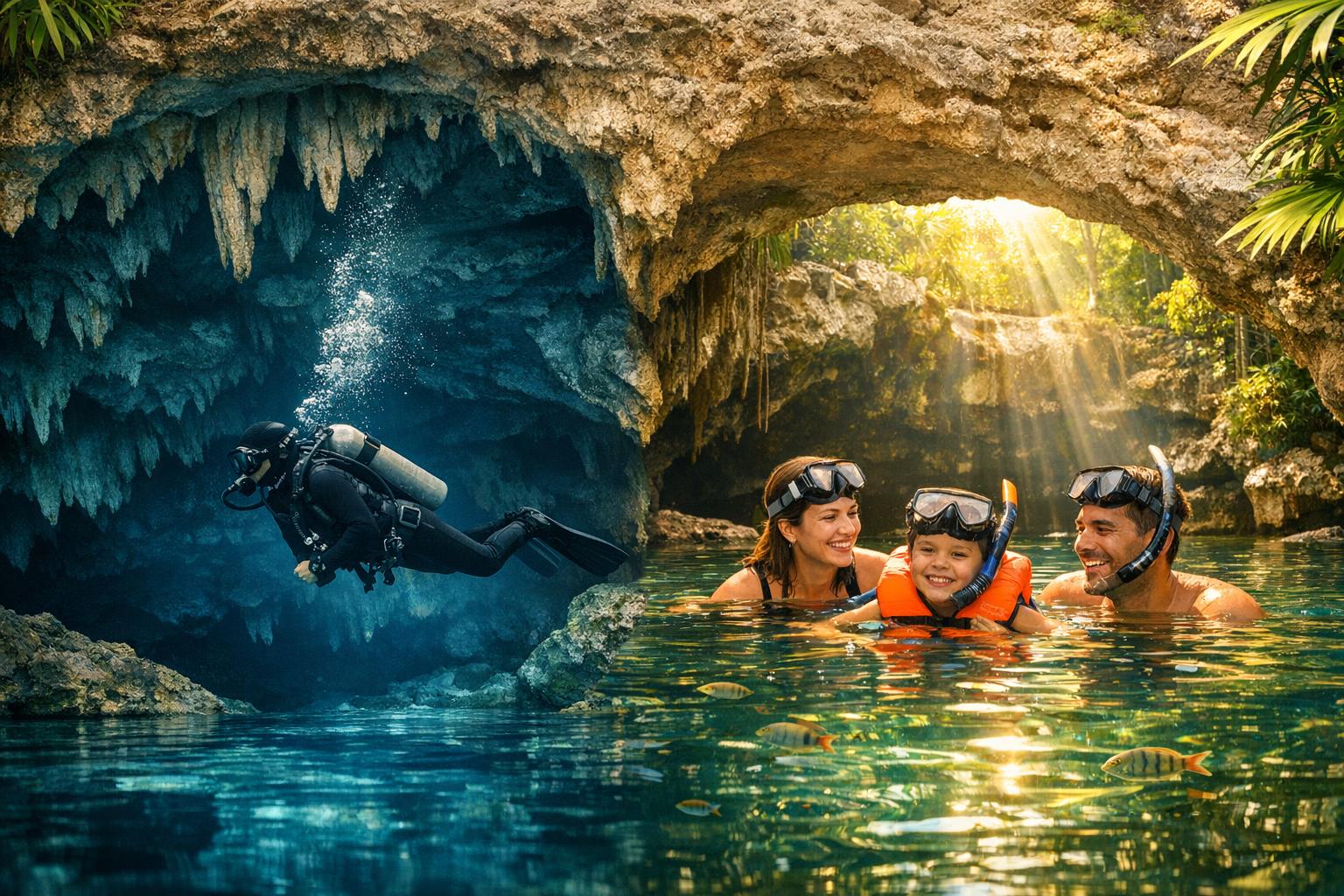
If you're deciding between Cenote Dos Ojos and Gran Cenote, here's the quick answer:
- Cenote Dos Ojos is perfect for divers and adventurers. Its vast 61-km cave system, including the "Barbie Line" and "Bat Cave", offers a tranquil, nature-focused experience. Entry starts at $350 MXN, with diving tours costing more.
- Gran Cenote is better for families and snorkelers. Its shallow, clear waters and sandy areas are beginner-friendly, with turtles often spotted. Entry is $30 USD (about $510–$600 MXN) but comes with a strict 1-hour limit.
Quick Overview:
- Dos Ojos: Best for diving, secluded, jungle setting, more relaxed.
- Gran Cenote: Best for snorkeling, closer to town, family-friendly, busier.
| Feature | Cenote Dos Ojos | Gran Cenote |
|---|---|---|
| Best For | Divers, explorers | Families, snorkelers |
| Entry Fee | $350 MXN | $30 USD (~$510–$600 MXN) |
| Distance from Tulum | ~20 min by car | ~5–10 min by bike/car |
| Crowds | Less crowded | Busier, 1-hour limit |
| Facilities | Basic (lockers, gear) | Hammocks, snack shop |
Choose Dos Ojos for a serene, adventurous dive or Gran Cenote for a lively, family-friendly swim.
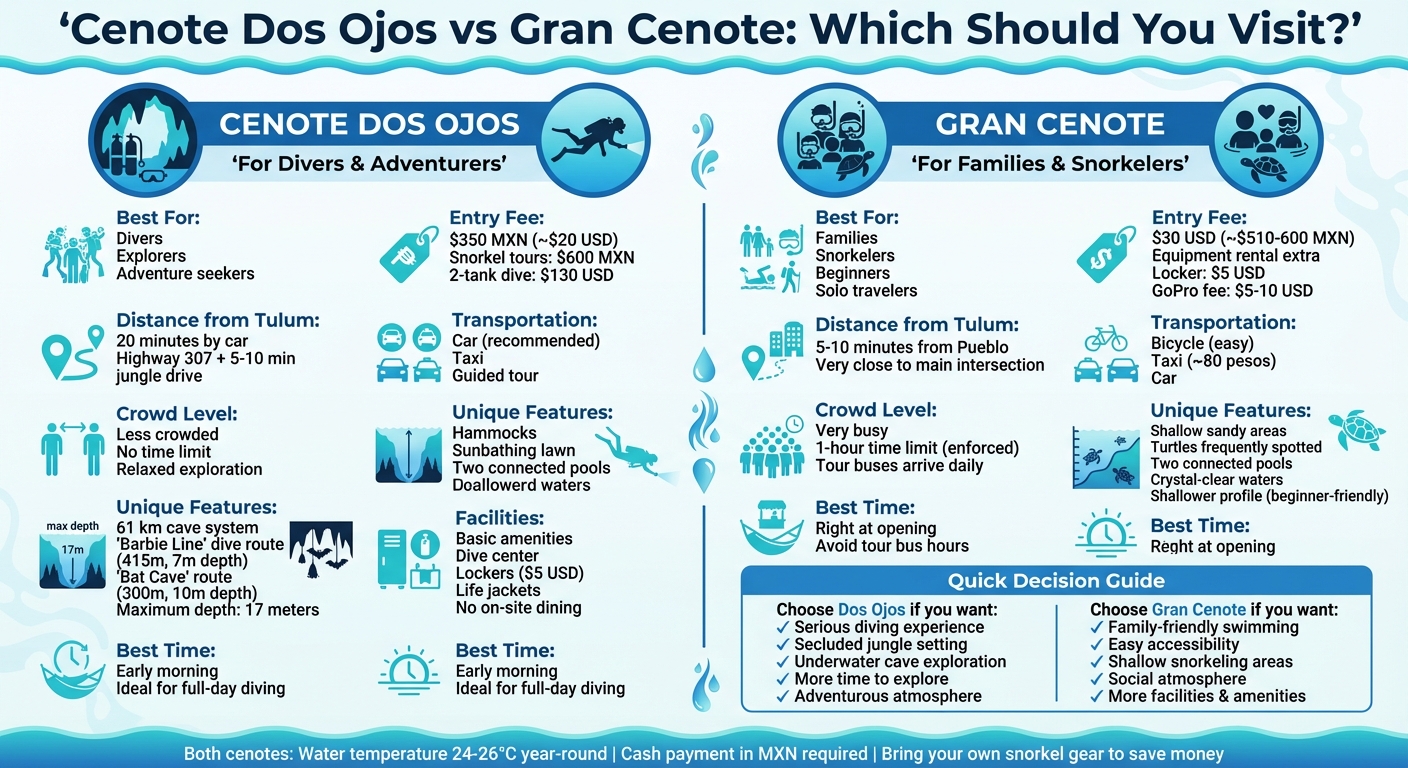
Cenote Dos Ojos vs Gran Cenote comparison chart for Tulum travelers
Location and How to Get There
Cenote Dos Ojos
Cenote Dos Ojos is about a 20-minute drive north of Tulum on Highway 307, roughly midway to Playa del Carmen. After turning off at the well-marked entrance (shared with El Pit cenote), you'll need to drive an additional 5–10 minutes through the jungle to reach the site [3]. The cenote is tucked away in a lush jungle setting, making the journey feel like part of the adventure.
For transportation, your best options are a private car, taxi, or joining a guided diving tour [2][3]. While taxis are available, having your own car offers more flexibility, especially since this is a popular spot for divers, and arriving early helps you avoid the crowds.
If you're comparing locations, Gran Cenote is much closer to town, making it a more convenient choice for those staying nearby. However, Cenote Dos Ojos offers a more secluded experience, ideal for divers seeking unique underwater conditions.
Gran Cenote
Gran Cenote is one of the easiest cenotes to access. Located just a few miles from Tulum Pueblo, it's close to the main intersection, making it incredibly convenient [1][4]. You can get there by bicycle, taxi (approximately 80 pesos from town), or car [2]. Its proximity to Tulum makes it an excellent option for a quick visit, especially if you're short on time.
Once you arrive, you'll notice their strict environmental measures. Travel blogger Ray from Gypsy Sols highlights:
They make you take a super freezing shower before entering the cenote to keep it pure from sunscreen, bug spray, and lotions [2].
So, skip applying any products before your visit - you'll just have to rinse them off anyway.
| Feature | Cenote Dos Ojos | Gran Cenote |
|---|---|---|
| Distance from Tulum | ~20 minutes [3] | ~5-10 minutes [2][4] |
| Best Transport | Car, Taxi, Guided Tour [2][3] | Bicycle, Taxi, Car [2] |
| Access Notes | 5-10 min jungle drive [3] | Mandatory cold shower [2] |
| Setting | Dense jungle, cave entrance [3][4] | Near town, walking paths [4] |
sbb-itb-8d6faf7
Diving and Snorkeling Conditions
Diving Comparison
Cenote Dos Ojos is one of the world's longest underwater cave systems, stretching an impressive 61 km. It offers two main dive routes: the Barbie Line, which spans 415 meters with a maximum depth of 7 meters, and the Bat Cave Line, measuring 300 meters and reaching a depth of 10 meters. The Barbie Line features spacious areas and stunning light-filled galleries, while the Bat Cave Line includes an air dome inhabited by a bat colony. Both routes are relatively simple and ideal for Open Water divers.
Gran Cenote, on the other hand, provides a contrasting diving experience. It consists of two pools linked by a cave system, blending open-water and cavern diving. With a maximum depth of around 17 meters, it offers more vertical exploration, making it a great choice for divers with some experience under their belts.
Now, let’s shift gears and explore how these cenotes stack up for snorkeling.
Snorkeling Comparison
For snorkeling, Gran Cenote stands out as the more family-friendly option. Its shallow areas with sandy bottoms make it easy for swimmers to stand, creating a welcoming environment for beginners and children. In contrast, Dos Ojos, while boasting crystal-clear waters, lacks accessible shallow zones. Its vast cave system can feel daunting for those new to snorkeling or less confident in the water.
| Feature | Cenote Dos Ojos | Gran Cenote |
|---|---|---|
| Cave System Length | 61 km[1] | Two connected pools[1] |
| Maximum Depth | 17 meters[1] | Shallower profile[1] |
| Best For Diving | Experienced divers seeking caves | Beginner to intermediate divers |
| Best For Snorkeling | Confident swimmers | Families and beginners[1] |
| Unique Features | Barbie Line & Bat Cave routes | Shallow sandy areas to stand[1] |
Cenote Dos Ojos | Is it worth it? | Riviera Maya, Mexico
Prices and Facilities
Visiting cenotes can be a breathtaking experience, but it’s worth noting that entry fees have gone up considerably. At Gran Cenote, the current cost is around $30 USD (approximately 510–600 MXN) per person as of May 2026 [2]. This marks a dramatic jump from its earlier price of 180 MXN [6]. Meanwhile, Cenote Dos Ojos offers general entry for about 350 MXN, with snorkel tours (which include Bat Cave access and gear) priced at roughly 600 MXN [6]. For diving enthusiasts, a 2-tank dive at Dos Ojos costs approximately $130 USD, and this includes entrance fees, underwater lights, and drinks [5].
Keep in mind that standard entry fees don’t cover equipment rentals at either location [2]. If you need snorkel gear, life vests, or lockers, expect to pay extra - locker rentals, for instance, cost around $5 USD (85–100 MXN) [2]. Additionally, there may be charges of $5–$10 USD for using GoPros or professional cameras [2]. To avoid these extra costs, consider bringing your own snorkel and mask.
The payment process and visit rules also vary. Both cenotes require cash payments in Mexican Pesos, as paying in USD often results in poor exchange rates [2][6]. Gran Cenote imposes a one-hour time limit for visitors due to its popularity, whereas Dos Ojos offers a more relaxed exploration experience [2].
Facilities differ significantly between the two. Gran Cenote is family-friendly, offering amenities like a large lawn for sunbathing, hammocks, and a snack shop [2]. In contrast, Dos Ojos focuses on diving, with a dedicated dive center, lockers, and life jackets. While Dos Ojos doesn’t have on-site dining, food options are available nearby in Tulum [1][2]. For divers, Dos Ojos also offers multi-dive packages that can be cost-effective. For example, a 3-tank combo (one tank at Gran Cenote and two tanks at Dos Ojos) costs $250 USD and includes lunch [5].
"The prices for the cenotes are no longer accurate. ... Grand Cenote was charging $30 dollars per person and we had a time limit of 1 hour." - Maria, Traveler [2]
These pricing and facility options can help you decide which cenote aligns better with your interests and budget.
Crowds and Overall Experience
When it comes to the overall vibe and visitor experience, Gran Cenote and Cenote Dos Ojos couldn’t be more different. Gran Cenote is easily the busiest cenote near Tulum, with large tour buses arriving from Chichén Itzá throughout the day [7]. It offers a lively, family-friendly atmosphere, complete with a lawn for sunbathing, hammocks to relax in, and even a snack shop for quick bites [2]. However, its popularity comes with a downside - strict crowd control measures, including a 1-hour time limit, have been in place since May 2026 [2].
On the other hand, Cenote Dos Ojos, while also popular, feels less congested thanks to its sprawling underwater cave system. This natural layout allows visitors, especially divers, to explore various sections without feeling cramped [7]. The cenote has a more tranquil, nature-focused ambiance, offering a sense of mystery and adventure rather than the social buzz of Gran Cenote [2].
"Perhaps the most popular cenote near Tulum, Gran Cenote is well worth a visit, just make sure you do it early in the morning because it gets crowded quickly." - Jennifer Fernández Solano, Writer, Lonely Planet [7]
If you want to avoid the crowds, arriving early - right at opening time - is key [7]. At Gran Cenote, the first pool area tends to fill up quickly. However, venturing through the tunnel to the second pool can lead to a quieter spot where you might even catch a glimpse of turtles [7].
Ultimately, your choice depends on the kind of experience you’re looking for. Gran Cenote is perfect for families who enjoy a lively setting with plenty of amenities, while Cenote Dos Ojos is ideal for adventurers and divers seeking a more serene, exploratory experience. Both offer something special, but the atmosphere at each is distinctly unique.
Which Cenote to Choose
Picking the right cenote comes down to what you’re looking for and how you like to travel. Each spot has its own vibe, so let’s break it down to help you decide.
If you’re traveling with young kids or just starting out with snorkeling, Gran Cenote is a great pick. Its shallow, crystal-clear waters and sandy bottom make it a safe and enjoyable spot for families [1][8][2]. As Loco Gringo describes:
Gran Cenote is about as popular as Dos Ojos for swimmers, snorkelers and divers. The diversity found in this cenote is wonderful. One side of the cenote is a sand bottom and shallow [8].
On the other hand, if you’re up for some thrilling underwater cave exploration, Dos Ojos might be more your speed.
For certified divers, Cenote Dos Ojos offers an incredible experience with its 61-kilometer cave system and famous routes like the "Barbie Line" and the "Bat Cave" [1][2]. It’s perfect for those who want to dive deep into adventure - literally.
Meanwhile, Gran Cenote also caters to solo travelers who want a relaxed, social atmosphere. With its park-like setting featuring a sunbathing lawn, hammocks, and a snack shop, it’s a laid-back spot to unwind and meet fellow travelers [2]. In contrast, Dos Ojos delivers a more atmospheric experience, complete with bats hanging from the cave ceilings, adding a touch of mystery to your visit [1][2].
When choosing, think about factors like diving conditions, ease of access, and the kind of facilities you prefer. Go for Gran Cenote if you want convenience and family-friendly amenities, or opt for Cenote Dos Ojos for a one-of-a-kind cave adventure.
Final Verdict
After weighing the key features, here's how to decide which cenote aligns with your plans.
Gran Cenote is ideal for families and snorkelers. It features shallow, sandy sections, friendly turtles, and a relaxed vibe with hammocks and a snack shop. However, keep in mind the higher entry fee and limited visiting hours [2]. On the other hand, Cenote Dos Ojos is perfect for divers and thrill-seekers. Its sprawling underwater cave system, including the well-known "Barbie Line" and "Bat Cave", offers a mesmerizing and otherworldly diving experience [2].
Both cenotes maintain a pleasant water temperature of 24–26°C throughout the year [9]. Gran Cenote's location near Tulum Pueblo makes it easy to reach by bike, while visiting Dos Ojos usually requires a car or taxi.
FAQs
What’s the best time of day to visit to avoid crowds?
The ideal time to visit is early in the morning, right after the cenote opens. This way, you can experience a quieter, more serene atmosphere before the crowds start to arrive.
Can I visit both cenotes in one day without rushing?
Yes, it's absolutely possible to visit both Cenote Dos Ojos and Gran Cenote in a single day without feeling hurried - if you plan wisely. Start your day early to maximize your time, and set aside a few hours for each cenote. Don't forget to factor in travel time between the two.
Transportation is straightforward, with options like renting a car or biking, both of which make getting around easy. With a well-thought-out schedule, you'll have plenty of time to enjoy swimming, snorkeling, or simply relaxing at both spots, while still leaving room for breaks.
What should I bring (and not bring) for snorkeling or diving?
When visiting cenotes like Dos Ojos or Gran Cenote for snorkeling or diving, it’s important to pack the right essentials. Make sure to bring items like a waterproof camera to capture the beauty, reef-safe sunscreen to protect your skin and the environment, a towel, dry clothes, and your own snorkeling or diving gear if it’s not included in your tour.
At the same time, there are things you should leave behind. Avoid carrying heavy or sharp objects, as they could damage the fragile ecosystem. Skip chemical-based sunscreens, which can harm the water and its inhabitants, and steer clear of large bags, which may disrupt the area or make movement cumbersome.
Lastly, always stick to the guidelines provided by your tour operator. This ensures not only your safety but also the preservation of these stunning natural wonders for future visitors.
Frequently Asked Questions
Do I need to be a certified diver to explore Cenote Dos Ojos?
You need an Open Water certification or higher to dive the Barbie Line and Bat Cave routes at Dos Ojos, since both routes enter overhead cave environments. Non-certified visitors can still snorkel the surface waters, though the experience is more rewarding for confident swimmers given the depth and cave setting.
Can a guided tour pick me up from my hotel in Tulum or Playa del Carmen for a cenote day?
Yes — Seth Dive Mexico offers free hotel pickup from Cancun all the way down to Tulum, so you don't need to rent a car or figure out taxis to reach cenotes like Dos Ojos. Just share your hotel name, dates, and experience level to get a custom itinerary built around your stay.
Is Dos Ojos suitable for complete beginners who have never dived before?
Complete beginners can participate through a Discover Scuba experience with a certified guide, which covers the basics before entering the water and keeps depth and distance well within safe limits. The Barbie Line's maximum depth of 7 meters and wide-open galleries make it one of the more approachable cave introductions available, provided you're with a qualified instructor.
Which cenote has better visibility and what actually affects it?
Both Dos Ojos and Gran Cenote typically offer exceptional visibility of 30 meters or more thanks to the filtered freshwater that fills the Yucatán's underground aquifer. Visibility can drop slightly at Gran Cenote during peak hours when more swimmers stir up sediment in the shallower sandy sections, making Dos Ojos the more consistent choice for photography and diving.
Is it worth doing a combined Dos Ojos and El Pit dive on the same day?
If you're a certified diver, combining Dos Ojos with nearby El Pit — famous for its hydrogen sulfide cloud and dramatic 120-meter depth — in one guided session is very doable and highly rewarding. A local guide who knows both sites can sequence the dives efficiently and handle all the logistics, leaving you free to focus on the experience.