Do You Need Your Own Gear for Cenote Diving in Mexico?
No—guided cenote diving in Mexico commonly includes scuba gear. Bring your own mask, regulator, or dive computer if you prefer fit and familiarity.
Do you need your own gear for cenote diving in Mexico?
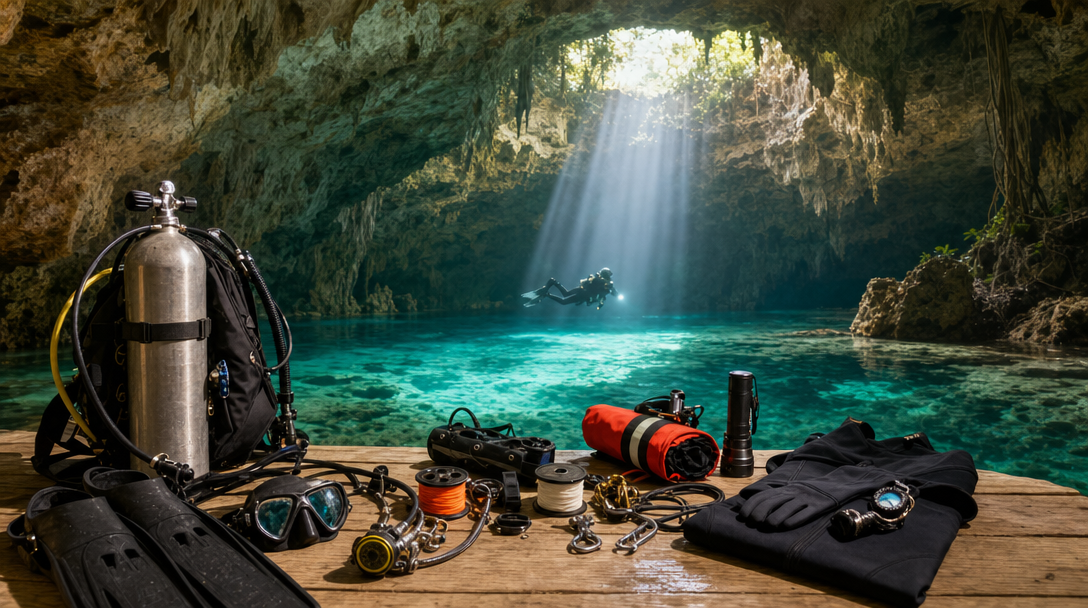
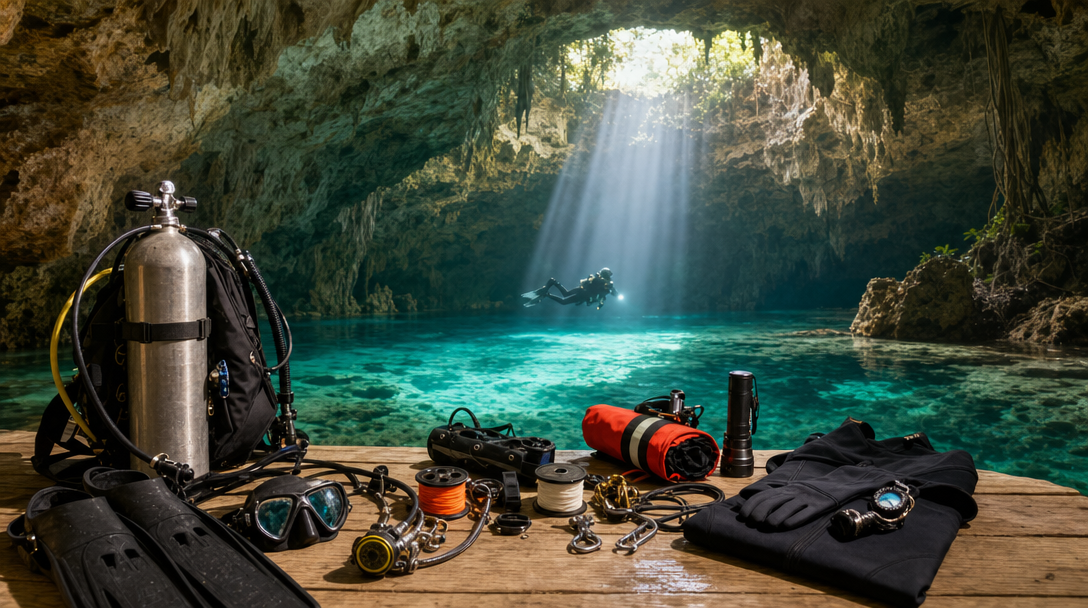
No. Guided recreational cenote dives in Mexico commonly include scuba gear, and divers can choose whether to use rental equipment or bring their own kit. Most guided cenote tours provide gear with a single-tank backmount setup, according to The Very Hungry Mermaid, so certified divers and beginners can join without hauling a full rig to the Riviera Maya.
If you own equipment you trust, you can still bring it. Experienced divers often travel with a personal mask, regulator, and dive computer for familiar fit, while relying on the operator for tanks, weights, and the rest. That flexibility matters more on a short vacation trip, where packing a full setup competes with clothes, chargers, and everything else.
For the exact configuration Seth Dive Mexico provides on a given cenote route, the cleanest move is to message with your dates, hotel, and certification level so the answer matches your actual dive plan.
Start Planning Your Dive
Rental gear vs your own kit: which should vacation divers use?
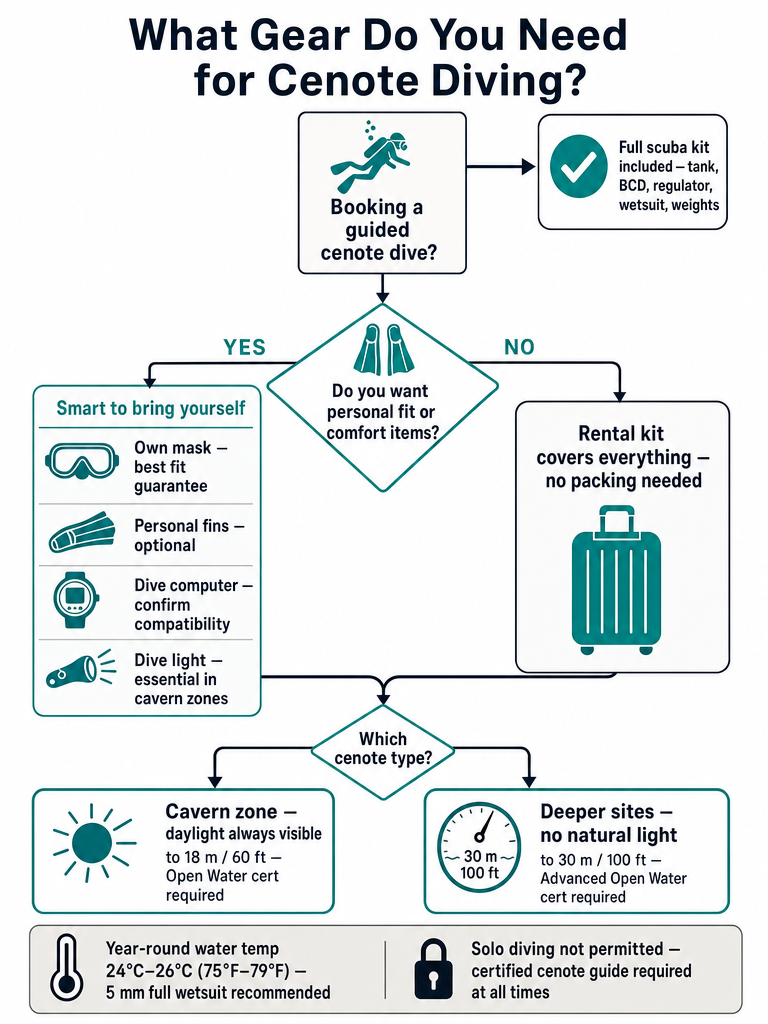
Rental gear is enough for most vacation divers doing guided cenote dives in the Riviera Maya, while personal equipment mainly earns its place through fit and familiarity. Most guided cenote tours include gear with a single-tank backmount setup (Source: The Very Hungry Mermaid), which covers what a standard cavern-zone dive needs. The decision comes down to comfort, travel bulk, and how many dives you plan.
Bring your own when a specific item makes your dive noticeably better. A mask that seals to your face, a regulator you've logged hundreds of dives on, or a dive computer you already read at a glance are the classic examples. A ScubaBoard divemaster planning a Cancún trip described carrying "backplate and wing, jet fins, along with other essentials (mask, regulator, gloves, boots, wetsuit)" as carry-on to keep bulk down.
For a two- or three-dive vacation, hauling a full setup is often more hassle than it's worth.
| Situation | Practical choice |
|---|---|
| First cenote dive, no gear owned | Rental gear from the operator |
| Fit-sensitive item (mask, regulator) | Bring your own, rent the rest |
| Multi-day dive vacation | Consider personal computer + mask |
| Traveling light / carry-on only | Rent locally |
If you're weighing private vs group dive tours in the Riviera Maya, gear inclusions are worth confirming alongside guide ratio.
What equipment is necessary for diving in cenotes?
Cenote diving requires standard scuba gear plus two safety-specific additions: reliable dive lights and thermal protection. The guideline through narrow passages is laid in advance by professionals, and your guide carries their own dive computer, so those aren't items you personally must own. La Calypso Dive Center confirms a dive computer is indispensable for monitoring depth and time, then adds: "Your guide will have theirs; you are not required to have your own."
Lights are the non-negotiable. La Calypso Dive Center calls a powerful dive light essential for illuminating your path in dark sections, and experienced divers push it further. On ScubaBoard, one contributor advised "definitely two lights apiece," noting that although you theoretically always see daylight in the cavern zone, "some of the dives really stretch that point."
Here's the working split:
- Provided or guide-managed: tank, weights, BCD, guideline, guide's dive computer
- Safety-critical, confirm before the dive: primary dive light plus backup, wetsuit
- Recreational cavern zone: stays where natural daylight is always visible
Experienced cenote divers recommend carrying two lights per diver, even in the daylight-visible cavern zone, according to divers on ScubaBoard. If you don't own a light, confirm the operator rents one before your dive day. See cavern vs cave diving in Mexico for why lighting rules differ by dive type.
What do I bring for cenote diving if gear is included?
Bring the items where personal fit changes your dive: mask, regulator, dive computer, and exposure protection you already trust. Tanks, weights, and BCDs are standard rental items, so there's little reason to pack them. The gear worth carrying is the gear that touches your face, your breathing, and your data.
A practical bring-your-own list, drawn from what divers actually pack for the Riviera Maya:
- Mask — a proven seal beats a mystery rental, and it packs small.
- Regulator — familiar breathing resistance; one ScubaBoard divemaster carried his as carry-on.
- Dive computer — optional since the guide has one, but convenient if you dive often.
- Wetsuit — bring your own if you run cold or want a guaranteed fit.
- Dive light — confirm whether the operator supplies one before assuming.
- Camera / GoPro — allowed, but check per-cenote fees.
Before the dive day, confirm two things with your guide: what's actually included, and whether your personal gear is compatible with their setup. If you don't own a light, The Very Hungry Mermaid advises confirming with the guide beforehand.
What to wear for diving cenotes in Tulum?
A 5 mm full wetsuit is the common recommendation for cenote diving in Tulum, even in warm-weather vacation conditions. Cenote water stays between 24°C and 26°C (75°F to 79°F) year-round, according to Seth Dive Mexico's cenote guide, and dives often run 40 to 50 minutes — long enough for cooler freshwater to pull heat from your body.
Experience on the ground backs this up. On ScubaBoard, divers reported cenote water around 77°F and gave a range of answers: a 3 mm shorty for warm-tolerant divers, a full 5 mm for anyone less comfortable with cold. One summed it up plainly: "For a short tour, 5mm should be fine. For longer dives I add a hooded vest." Another cold-sensitive diver said simply, "I used a 5 mm."
The pattern is straightforward. If you chill easily or plan back-to-back dives, lean toward the 5 mm. If you have high cold tolerance and you're doing one shorter dive, a 3 mm can work.
What certification do I need for diving cenotes in Tulum?
Open Water certification is enough for most cenote dives in Tulum, since recreational cavern dives stay in the daylight-visible zone. Seth Dive Mexico's cenote guide lists the Open Water depth limit at 18 meters (60 feet) for cavern-zone dives where natural daylight is always visible. Deeper sites raise the bar to Advanced Open Water.
The DiveTalk community makes the same point directly: "only an open water diver certification (and good buoyancy control) is required to dive the cenotes in Mexico." Cavern diving stays within natural light and, per The Very Hungry Mermaid, no farther than 60 m from the entry point.
| Certification | Depth limit | Example cenotes |
|---|---|---|
| Open Water | 18 m (60 ft), cavern zone | Dos Ojos, Ponderosa |
| Advanced Open Water | 30 m (100 ft) | The Pit, Cenote Angelita |
| Full Cave | Beyond daylight zone | Technical cave systems |
Deeper cenotes with haloclines or hydrogen sulfide layers — The Pit, Cenote Angelita — require Advanced Open Water for the 30 meters (100 feet) range, according to Seth Dive Mexico's guide.
Your cenote list should decide your certification, not the other way around. If you already know you want The Pit or Angelita, weigh whether Advanced Open Water is worth it for cenote diving. If you're certified at Open Water, see which cenotes you can dive with Open Water and how to choose between Angelita, The Pit, and Dos Ojos.
Is it possible to dive alone in a cenote?
No. Guided cenote diving in Quintana Roo is not a solo activity, and diving cenotes without a guide is not permitted. You should expect supervision by a qualified cenote guide throughout the dive. This is both a safety standard and a local rule for overhead environments where a pre-laid guideline and small-group control keep everyone oriented.
Professional cenote guides carry serious credentials. Per The Very Hungry Mermaid, guides should be certified cave divers, hold at least divemaster level, use a double-tank setup, and guide no more than 4 divers at a time. That small ratio is what keeps a cenote dive from feeling like a crowded procession.
The reassuring version: you're never meant to figure out a cavern route yourself. A DiveTalk diver credited "our very own private guide who has been diving these cenotes since the 80's" as a wealth of local and cultural knowledge — the kind of guiding a small-group or private trip is built around.
Would it be foolish to do cenote diving without cave certification?
No. Cave certification is not required for properly guided recreational cavern dives, where daylight remains visible the entire time. The confusion is common, but cavern and cave diving are separate activities. As one scuba community summary puts it: "You do NOT have to be cave certified to do Cenote diving." Cave diving beyond daylight limits is a different technical discipline with its own training.
The boundary is set by geography. Cavern diving means staying where natural light is visible and, per The Very Hungry Mermaid, no farther than 60 m from the entry point. Cross that boundary — into full darkness, deep into the tunnel system — and you're in cave territory that demands technical cave certification, redundant gear, and specialized training.
For a normal guided cenote dive at Dos Ojos or Ponderosa, your Open Water card plus good buoyancy control is the honest requirement. The cavern vs cave diving breakdown explains exactly where the two split and why it matters for your safety.
What extra costs should you confirm before cameras, entrance fees, or a third cenote dive?
Confirm three cost categories before booking: cenote entrance fees, camera fees, and any add-on dives. Guided cenote dives generally range from $85–$130 USD with gear rental and entrance fees included in most packages, according to Seth Dive Mexico's guide, while private tours start from $185/person. The surprises usually hide in the extras.
Camera fees catch people off guard. Rigo The Cenote Guide notes some cenotes charge 150–500 pesos to bring a GoPro or camera; The Very Hungry Mermaid puts larger-camera fees around $10–25. Adding a third cenote dive can run $60 extra plus the entrance fee (Source: Rigo The Cenote Guide).
Entrance fees vary by site (all per Rigo The Cenote Guide):
| Cenote | Entrance fee |
|---|---|
| Dos Ojos | 400 pesos |
| Cenote Eden | 500 pesos |
| The Pit | 500 pesos |
| Angelita | 350 pesos |
The base dive price is only part of the story — camera, entrance, and extra-dive fees decide your real total. Before you book, confirm your pickup area, whether gear and lights are included, and which fees are already covered. See what's included in private cenote diving cost for the full breakdown, and how hotel pickup works from Cancun to Tulum to lock in logistics.
Message Seth with your dates, hotel, and experience level for a clear, all-in recommendation.
Start Planning Your Dive
Frequently asked questions
Do you need your own gear for cenote diving in Mexico?
No — guided recreational cenote dives in Mexico include scuba gear. Most operators provide a single-tank backmount setup, so certified divers and beginners can join without hauling a full rig to the Riviera Maya. That said, fit-sensitive items like your personal mask or regulator are worth bringing if you own them. Confirm exactly what's included when you book, since configurations vary by operator and dive site.
What certification do I need for cenote diving in Tulum?
Open Water certification covers most cenote dives in Tulum, allowing you to explore the cavern zone — where natural daylight is always visible — down to 18 meters (60 feet). Deeper sites like The Pit and Cenote Angelita require Advanced Open Water for dives reaching 30 meters (100 feet). Cave certification is only needed if you plan to venture beyond the daylight zone, which is a separate technical discipline entirely.
What equipment is necessary for diving in cenotes?
Standard scuba gear plus a reliable dive light are the essentials. Dive lights are non-negotiable — experienced cenote divers recommend carrying two per diver, even in the cavern zone where daylight is technically visible. A wetsuit rated for 24–26°C (75–79°F) freshwater is critical for dives running 40–50 minutes. A dive computer is useful but not mandatory, since your guide carries one. Confirm whether your operator rents lights before dive day.
What wetsuit thickness do I need for cenote diving?
A 5 mm full wetsuit is the standard recommendation. Cenote water stays between 24°C and 26°C (75–79°F) year-round, and dives typically run 40–50 minutes — long enough for freshwater to pull heat from your body. Warm-tolerant divers have managed with a 3 mm shorty for shorter dives, but divers on ScubaBoard consistently note that cold-sensitive divers or those doing back-to-back dives should go with 5 mm.
Do I need cave certification to dive the cenotes in Mexico?
No. Cave certification is not required for properly guided recreational cenote dives. Cavern diving — where natural daylight is always visible and you stay within 60 meters of the entry point — is open to Open Water certified divers with good buoyancy control. Cave diving beyond the daylight zone is a different technical discipline requiring separate training. Most guided cenote experiences at sites like Dos Ojos or Ponderosa fall firmly in the cavern category.
What extra fees should I confirm before booking a cenote dive?
Confirm cenote entrance fees, camera fees, and add-on dive costs before booking. Guided cenote dives generally start from $85–$130 USD with gear and entrance included in most packages, while private tours start from $185 per person. Camera fees at some cenotes run 150–500 pesos for a GoPro. A third cenote dive can add roughly $60 plus the entrance fee. Ask specifically which fees are already covered so there are no surprises on dive day.
Sources
- Would it be foolish to do cenote diving without cave ...www.facebook.com
- A Guide to Cenote Scuba Diving in Mexico.theveryhungrymermaid.com
- Equipment for Cenotes Guided divescubaboard.com
- Tulum cenote diving : All you need to know before divingwww.lacalypsodivecenter.com
- Cenote Diving in Mexico: The Complete Guide for 2026rigothecenoteguide.com
- FAQ | Cenote Diving - Rigo The Cenote Guide - Cenote Divingxicodivecenter.com
- Mexico Dive Travel Tips | Gear, Transport & Safetywww.reddit.com