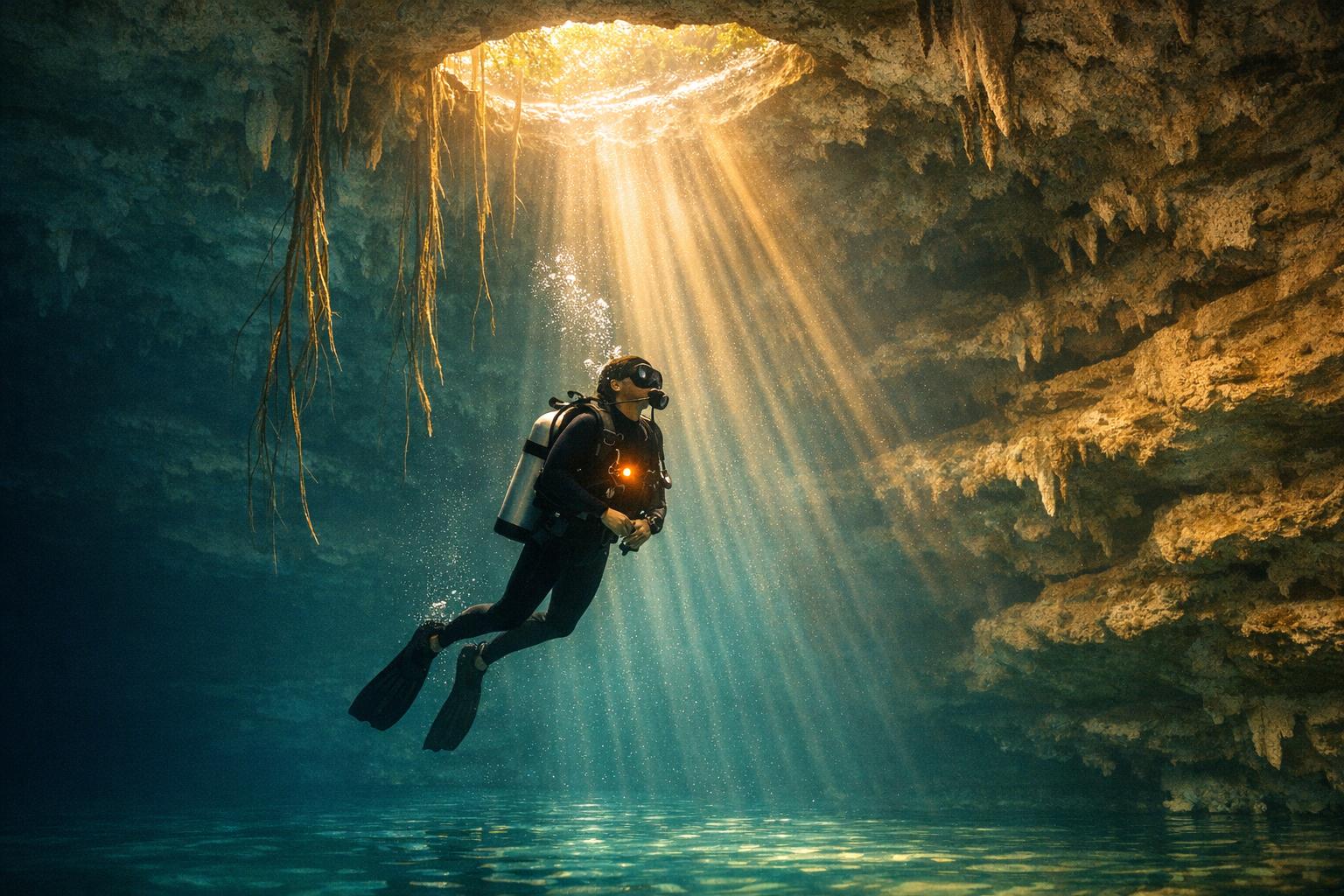
Diving into a cenote near Tulum is an unforgettable way to experience Mexico's natural beauty. These freshwater sinkholes offer crystal-clear visibility (up to 40 meters), year-round water temperatures of 24°C–26°C, and breathtaking underwater formations like stalactites and stalagmites. Perfect for beginners, cenote diving has calm waters, no currents, and guided programs like PADI Discover Scuba Diving, which allow you to explore depths of 6–10 meters without prior certification.
Key takeaways:
- Beginner-friendly: No certification needed; calm, clear water makes it ideal for first-timers.
- Unique features: Light beams, haloclines (where freshwater meets saltwater), and ancient rock formations.
- Safety-focused: Small group sizes (max 4 divers per guide), shallow-water practice, and professional guidance.
- Cost: Starts at $135 MXN per person, with optional add-ons like private tours or extra dives.
Prepare by staying hydrated, avoiding alcohol, and booking in advance during peak season (Dec–Apr). Dive day includes hotel pickup, a pre-dive briefing, and a serene underwater adventure. Whether you're drawn by the tranquility or the stunning visuals, cenote diving near Tulum is a must-try experience.
First Time Diving - Tulum Mexico - Casa Cenote
sbb-itb-8d6faf7
What Happens on Your First Cenote Dive
Your first dive into a cenote is like stepping into a natural masterpiece. It’s an experience that combines breathtaking sights with a touch of adventure.
How Cenotes Form and What You'll See Underwater
Cenotes are the result of limestone erosion over thousands of years. This process creates underground rivers and caves, and when the ceilings of these caves collapse, they reveal the freshwater below. These formations are now incredible dive sites waiting to be explored.
Underwater, the scenery is unlike anything you'll see in the ocean. Visibility often ranges from 50 to over 100 meters[6], giving you a crystal-clear view of the surroundings. Beams of light stream through the openings above, creating what divers call "light curtains"[3]. You'll spot stalactites hanging from the ceiling and stalagmites rising from the floor, adding to the magical atmosphere. In some cenotes, you might even encounter a halocline - a layer where freshwater and saltwater meet. This creates a shimmering, blurred visual effect and a slight temperature shift that's both strange and fascinating[3].
These natural wonders set the stage for a dive experience that feels entirely unique.
What First-Timers Feel and Face
The first minute underwater might feel a bit odd as your body adjusts to the new environment[2]. But that initial strangeness quickly fades, replaced by a sense of awe. One of the first challenges you'll encounter is equalizing the pressure in your ears as you descend, but your instructor will guide you through this step by step[2]. Freshwater buoyancy also behaves differently compared to saltwater, so you may need to fine-tune your balance. While the darker parts of the cavern might seem a little intimidating at first, beginner areas are always illuminated by natural light, which helps calm any nerves[2][6].
"The experience of breathing underwater is so novel and engaging that your brain shifts from anxiety to wonder." – Seth Dive Mexico[2]
These feelings of discovery make the safety measures and guidance all the more important.
Safety and Guidance with Seth Dive Mexico
At Seth Dive Mexico, safety is the cornerstone of every beginner dive. Groups are kept small, with no more than four divers per guide[5]. Before heading into the cenote, you'll spend 30–45 minutes in a shallow-water session to practice essential skills like breathing, clearing your mask, and controlling your buoyancy[2]. Your instructor will also brief you on the equipment, hand signals, and the cenote’s unique features.
Dives are confined to the cavern zone, where natural light is always visible, and a permanent guideline ensures you stay oriented[6]. For beginners, the Discover Scuba Diving program limits dives to a maximum depth of 12 meters, with most dives taking place between 6 and 10 meters[2][6]. The water temperature remains steady year-round, ranging from 24°C to 26°C[6]. All the necessary equipment, including additional underwater lights, is provided and meticulously maintained to ensure your safety.
How to Prepare for Your Dive
Getting ready for your first cenote dive is straightforward when you're aware of what to expect.
Equipment You'll Need
Seth Dive Mexico provides all the diving gear you'll need for your cenote adventure. This includes a buoyancy control device (BCD), regulator, tank, weights, mask, fins, and wetsuit. They also supply specialized equipment like underwater lights and extra safety gear tailored for cenote diving.
You can choose between 3mm and 5mm wetsuits, though most divers prefer the 5mm option for back-to-back dives in water temperatures ranging from 24°C to 26°C. Pack essentials like a swimsuit, towel, a change of clothes, and sandals or water shoes.
Be sure to use biodegradable sunscreen to protect the cenote's fragile ecosystem. Regular sunscreens contain harmful chemicals and are strictly prohibited.
How to Book a Discover Scuba Program
The Discover Scuba - Cenote program starts at $135 per person. This rate covers pickups from Playa del Carmen and areas further south, including Tulum. If you'd like to add a second cenote dive to your day, it's an extra $50. For a completely private experience with no other guests, you can upgrade for $100.
The cost includes a PADI instructor, all necessary diving gear, and free hotel pickup and drop-off from anywhere between Cancun and Tulum. A $100 USD deposit secures your spot, with the remaining balance due on the day of the dive. During peak season (December through April), it's wise to book at least 2–3 weeks in advance. Reservations can be made quickly via WhatsApp, through the website's contact form, or by emailing hello@sethdive.com.
Getting Ready Mentally and Physically
Once your equipment is sorted and your booking is confirmed, the next step is to prepare yourself mentally and physically.
It's completely normal to feel a bit nervous before your dive. The program includes a 30–45 minute shallow-water skills session to help you gain confidence. You'll practice in water shallow enough to stand in, and you can pause or stop at any time if needed.
Stay hydrated the day before and on the morning of your dive. Avoid alcohol the night before to prevent dehydration and make ear equalization easier. On dive day, have a light breakfast to keep your energy up without feeling too full. Leave jewelry like rings and necklaces at your hotel - they can easily be lost in the water. Lastly, if you're flying home soon, plan your dive at least one full day before your departure. You'll need to wait 18 hours after diving before boarding a plane.
What Happens on Dive Day: Step-by-Step
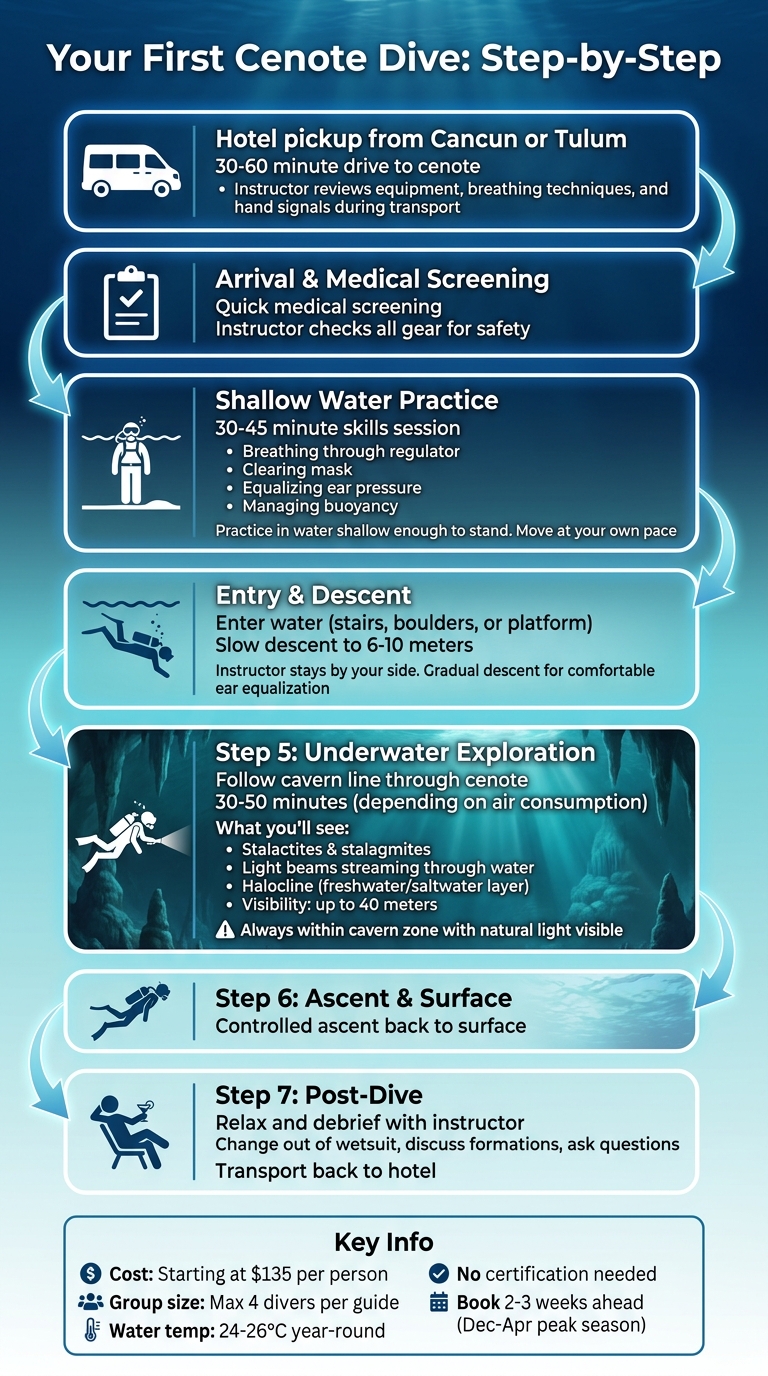
First-Time Cenote Diving Experience: Complete Step-by-Step Guide
Pickup, Arrival, and Pre-Dive Briefing
Your dive day kicks off with your instructor picking you up straight from your hotel, whether you're staying in Cancun or Tulum. The drive to the cenote takes about 30 to 60 minutes. During the trip, your instructor goes over the essentials: equipment, breathing techniques, and hand signals to ensure you're fully prepared [2].
Once you arrive, there's a quick medical screening to confirm you're ready to dive. Your instructor carefully checks all your gear to make sure everything is in perfect working order [2]. Before heading into deeper waters, you'll practice key skills in shallow water. This includes breathing through the regulator, clearing your mask, equalizing ear pressure, and managing your buoyancy [2]. The session is designed to move at your pace, and you can stand up at any time if needed. By the time you're done, you'll feel confident and ready to dive in.
Getting in the Water and Exploring
How you enter the water depends on the cenote - some have staircases, while others might require navigating boulders or even jumping from a platform [1]. Your instructor stays by your side, guiding you through a slow and steady descent to a depth of 6 to 10 meters [2]. Since equalizing ear pressure can be tricky, the descent is taken gradually to keep you comfortable.
"We stay within the cavern zone, which means we always have natural light visible and remain within a short distance of an exit." - Seth Dive Mexico [6]
Once underwater, you'll follow a fixed rope known as the cavern line. This guides you as you swim amidst stunning stalactites and stalagmites. The water clarity is incredible, with visibility reaching up to 40 meters [1]. You'll witness breathtaking light beams streaming through the water and encounter the halocline, a shimmering layer where fresh and salt water meet. The unique combination of light, water, and geological formations makes cenote diving an unforgettable experience. Depending on how efficiently you use your air, the dive typically lasts between 30 and 50 minutes [1][2]. After exploring the cenote's magical depths, you'll ascend back to the surface.
After the Dive
Once you're out of the water, there's time to unwind and soak in the serene surroundings of the cenote. You can chat with your instructor about what you saw, ask questions, and learn more about the formations you explored. After changing out of your wetsuit and drying off, you'll enjoy the tranquil atmosphere before heading back to your hotel. It's the perfect way to end a memorable dive.
Tips for a Safe and Enjoyable Cenote Dive
How to Control Your Buoyancy
Getting the hang of buoyancy control is key for your first cenote dive. Luckily, your Buoyancy Control Device (BCD) does most of the heavy lifting, so there's no need for constant swimming. The trick is to keep your breathing steady and natural - panicked or shallow breathing can lead to sudden depth changes, which might disrupt the serene underwater environment.
"You don't need to swim - your fins and buoyancy equipment do the work. Just relax and breathe." - Seth Dive Mexico [2]
The first minute underwater is crucial. Once you settle into a calm breathing rhythm, managing buoyancy becomes much more intuitive. This is especially important in cenotes, where even minor disturbances can cloud the water or damage ancient formations like stalactites and stalagmites. A 5 mm wetsuit is ideal for the 24 °C water, keeping you warm while allowing easy movement [1]. Finally, choosing a dive site and guide that match your skill level is just as important for a smooth experience.
Picking the Right Dive Level and Guide
Beginner-friendly cenotes such as Dos Ojos (with depths up to 10 m) or Casa Cenote are perfect for first-timers. These sites feature wide-open spaces and consistent natural light, making them less intimidating [1][7]. For the best experience, consider a private tour with a 1-on-1 or 1-on-2 instructor-to-student ratio. This setup ensures personalized attention and guidance throughout your dive [2]. Seth Dive Mexico offers a Discover Scuba Diving program starting at $135 per person, which includes private instruction, hotel pickup, and all necessary gear [2].
These beginner-friendly options create a controlled environment where you can focus on learning the basics. During your first descent, your instructor will stay close, helping you fine-tune your buoyancy and equalize pressure in your ears. For a hassle-free experience, book your dive 3 to 5 days in advance, especially during the busy December-to-April season [6]. Once you’ve wrapped up your dive, there are a few steps to ensure a smooth recovery.
What to Do After Your Dive
Post-dive care is just as important as the dive itself. Start by staying hydrated. Drinking water right after your dive helps your body recover faster, so steer clear of alcohol for the time being. Take some time to jot down details like dive depth, duration, sightings, and how you felt during the experience. Sharing these notes with your instructor or fellow divers can help you improve and build confidence for future dives.
Don’t forget the no-fly rule: wait at least 18 hours before flying after your dive [2]. Also, pack warm clothes or a towel for after the dive, as the cool freshwater and surrounding environment can leave you feeling chilly once you surface [1]. This downtime is the perfect opportunity to reflect on the incredible formations you’ve seen and start planning your next underwater adventure.
Conclusion
The memory of your first cenote dive lingers long after you’ve surfaced. Diving in a cenote near Tulum is an underwater adventure unlike any other. With over 100 meters of crystal-clear visibility, awe-inspiring ancient rock formations, and tranquil, current-free waters, it’s an experience that feels almost otherworldly [8][4]. Whether it’s the mesmerizing sunbeams cutting through the water or the thrill of gliding past stalactites, every moment leaves an impression.
Cenote diving is an activity open to everyone. Thanks to Seth Dive Mexico’s Discover Scuba program, you can begin exploring the underwater world within hours - no prior experience or certification needed [2]. The program is designed with beginners in mind, offering expert guidance from certified instructors who ensure your safety and comfort every step of the way [8].
"The combination of doing something completely new and doing it in a setting this beautiful makes it unforgettable." - Seth Dive Mexico [2]
Don’t wait - book your cenote dive today. If you’re planning to visit during the peak season from December to April, make sure to secure your spot early [6]. Your first breath beneath the surface of an ancient cenote is closer than you think.
FAQs
Can I dive a cenote if I’m claustrophobic?
If tight spaces make you uneasy, cenote diving might feel a bit daunting since many routes involve narrow passages or enclosed areas. But don’t worry - there are options! Cenotes like Dos Ojos offer routes with spacious, open sections that feel far less restrictive. It’s a good idea to talk to your instructor about any concerns ahead of time. They can help you pick a route that matches your comfort level, ensuring your dive is both safe and enjoyable.
What medical conditions can stop me from diving?
Certain health conditions can make diving risky. Issues with the heart, lungs, or nervous system are among the primary concerns. For example, severe asthma, uncontrolled epilepsy, or recent surgeries could lead to complications underwater. If you're unsure about your health, it's crucial to consult a doctor before diving.
Can I bring a GoPro or phone for photos?
Yes, you can take your GoPro or phone to snap photos while diving in the cenotes near Tulum. Make sure it’s protected with a waterproof housing or case to avoid any damage. Also, stick to the safety instructions given by your instructor to keep your gear safe during the dive and enjoy documenting the breathtaking underwater scenery.
Frequently Asked Questions
Do I need to be a strong swimmer to try cenote diving near Tulum?
Basic comfort in water helps, but you don't need to be a strong swimmer for a Discover Scuba session in a cenote. Your buoyancy control device keeps you neutrally buoyant, your guide stays beside you the entire dive, and the calm, current-free water means you're never fighting to stay afloat.
How far in advance should I book a cenote dive, and can I get hotel pickup from Cancun?
Booking 2–3 weeks ahead is wise during peak season (December through April) when spots fill quickly. Free hotel pickup is included from anywhere between Cancun and Tulum, so your location along the Riviera Maya doesn't add any extra planning friction.
What's the difference between a private cenote dive and a regular group booking?
A standard booking keeps groups small at a maximum of four divers per guide, but a private upgrade means no other guests share your session, giving you a fully customized pace, route, and itinerary. The private option adds $100 to the base price and is especially popular for couples and families who want undivided instructor attention.
Which cenote near Tulum is best for a first-time diver?
Dos Ojos and Casa Cenote are consistently recommended for beginners because both feature wide-open cavern zones, consistent natural light throughout the dive, and shallow sections that make ear equalization and buoyancy practice forgiving. Sharing your experience level with Seth ahead of time ensures the site picked that day genuinely matches where you are as a diver.
Will I see marine life inside a cenote, or is it mostly rock formations?
Cenotes are freshwater environments, so you won't encounter tropical reef fish, but the visual experience is driven by ancient stalactites, stalagmites, dramatic light beams, and the shimmering halocline layer where fresh and salt water meet. Some cenotes like Casa Cenote connect to the sea and can host small fish and turtles in their shallower, brackish sections.